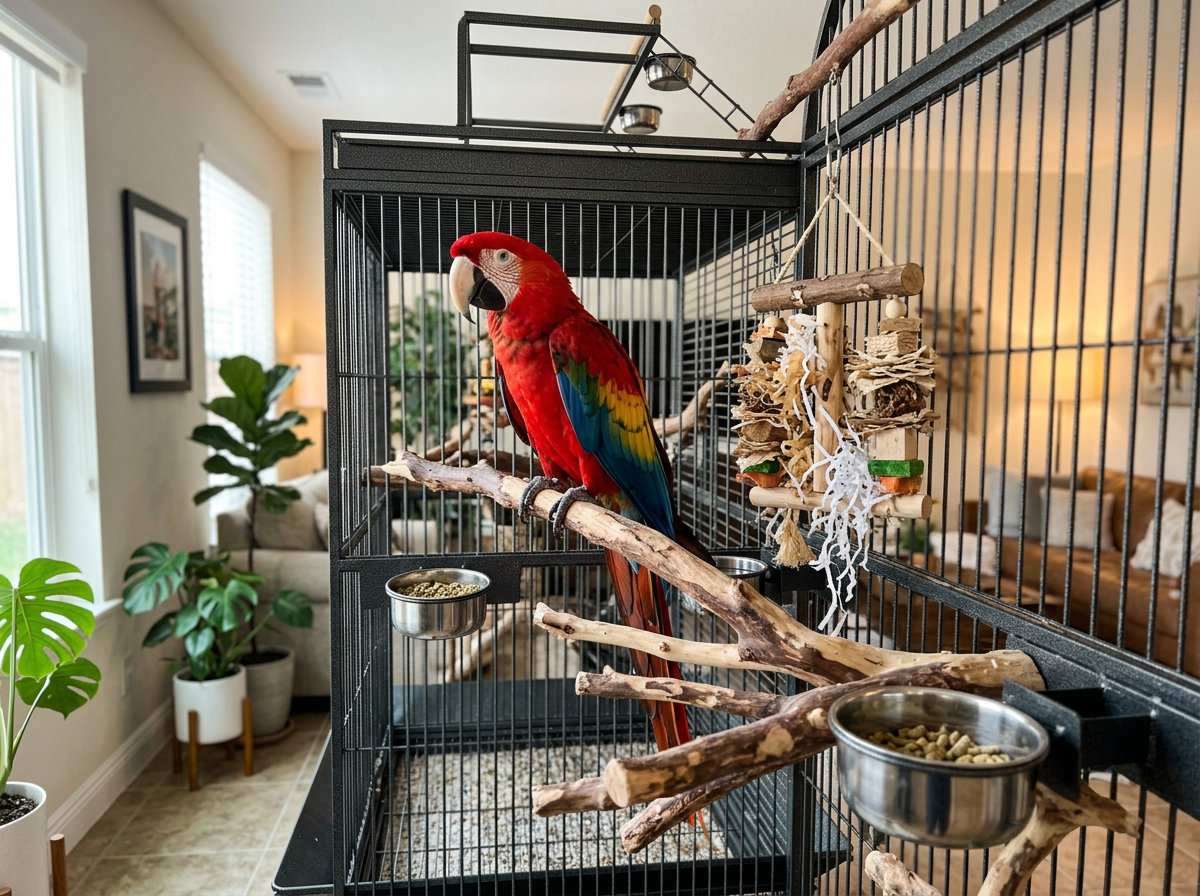
If you searched 'best bird for beginner falconry,' there's a good chance you're coming from a pet-bird mindset and wondering whether falconry is something you can realistically take on. The short answer: yes, but it's a completely different world from keeping a parakeet or a cockatiel. The best bird for a first-time falconer in the U.S. is almost universally the American Kestrel or the Red-tailed Hawk, depending on your goals and living situation. Which one is right for you comes down to a handful of practical factors, and this guide walks through all of them.
Best Bird for Beginner Falconry: Pick the Right First Option
Marcus Chen
23 Mar 2026
Falconry birds vs. pet birds: what you're actually signing up for
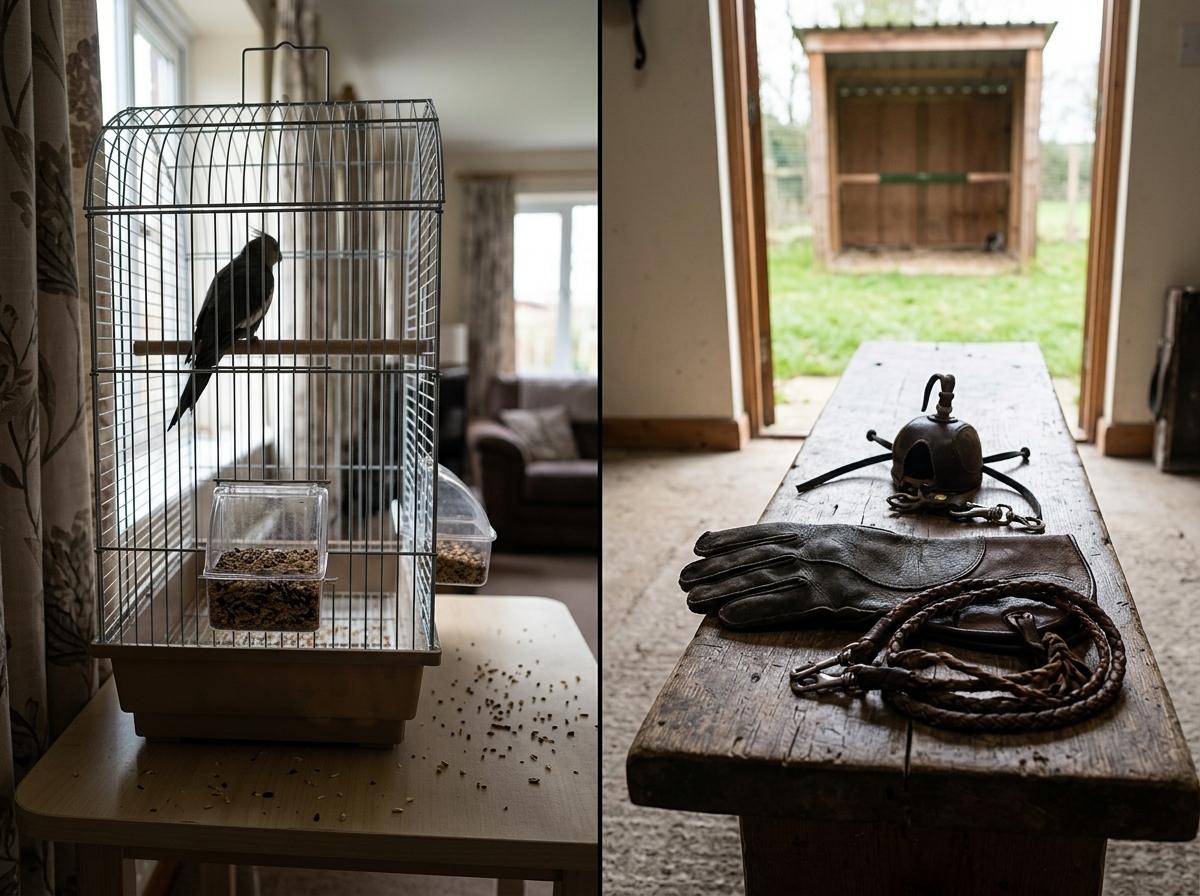
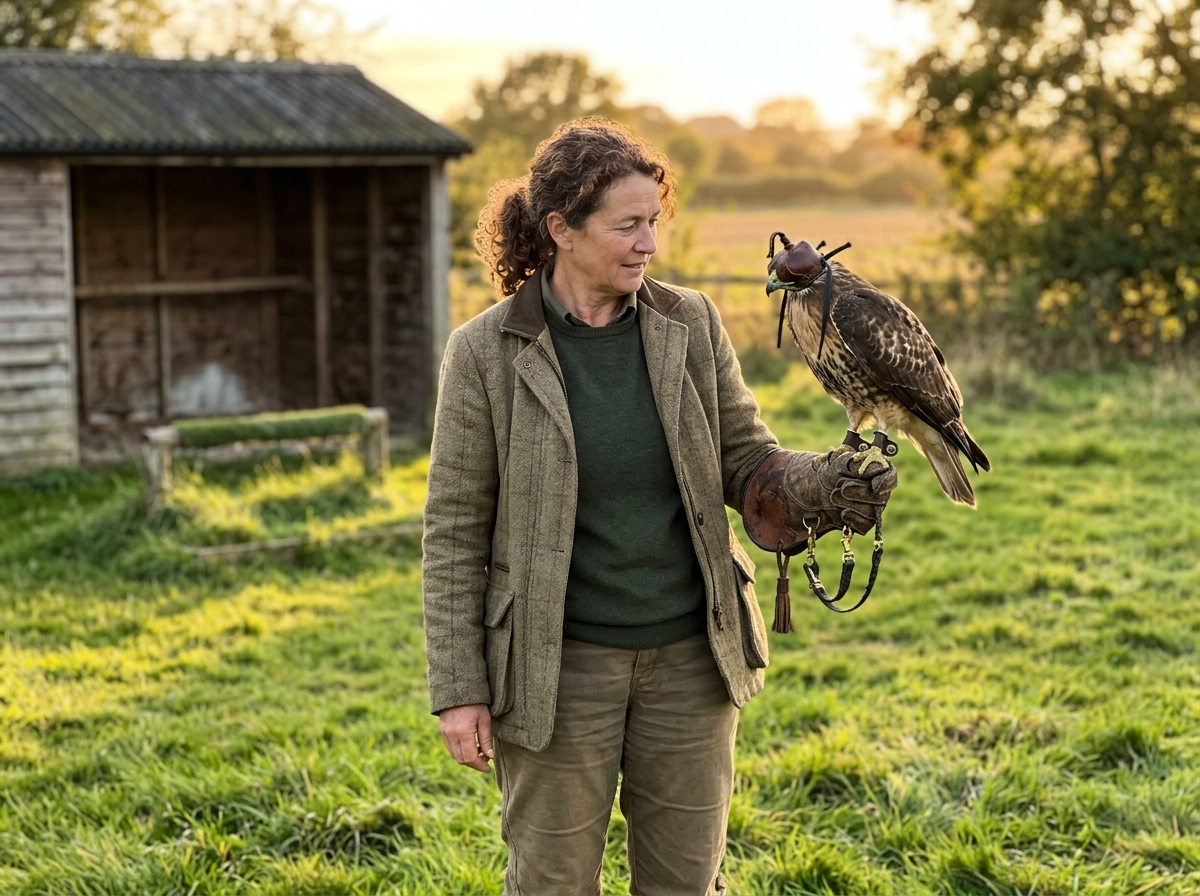
Most people who land on a site like this are thinking about birds as companions, and that framing makes sense when you're looking at cockatiels, budgies, or conures. Falconry is a different discipline entirely. A falconry bird is a working raptor (a hawk, falcon, or sometimes an owl) that you train to hunt alongside you. The bird is not domesticated in the way a parrot is. It doesn't 'love' you the way a hand-raised cockatiel might. The relationship is built on trust, consistent conditioning, and weight management, and if you stop working the bird regularly, that relationship degrades fast.
The other major distinction is legal. Under U.S. federal law (50 CFR § 21.82), you cannot simply buy a raptor and call yourself a falconer. You need a state falconry permit, and you have to pass an examination that covers care, handling, and applicable falconry laws before you ever touch a bird. Most states model their licensing on a three-tier system: Apprentice, General, and Master falconer. New York, for example, uses exactly that structure. As an Apprentice, you're limited to specific species and must be sponsored by a General or Master falconer for at least two years. That mentorship requirement is actually a huge advantage for beginners, because you learn from someone who has already made all the expensive mistakes.
If you're coming here hoping to find a raptor you can keep like a pet bird in a cage on your living room perch, that's not falconry and it's not legal. If you're genuinely interested in the sport, the hunting, the daily training, and the real commitment it takes, keep reading. This is one of the most rewarding things you can do with a bird.
The top beginner falconry birds, compared
There are several species commonly recommended for beginners, but not all of them are equally forgiving. Here's how the most frequently suggested starter raptors stack up across the traits that matter most in day-to-day falconry.
| Species | Temperament | Training Difficulty | Care Complexity | Availability (U.S.) | Best For |
|---|---|---|---|---|---|
| American Kestrel | Feisty but manageable | Moderate (sensitive to weight) | Lower (smaller housing, less food) | Good (captive-bred available) | Apartment-friendly beginners, small game |
| Red-tailed Hawk | Calm, tolerant | Beginner-friendly | Moderate (larger housing, more food) | Excellent (wild-trapped or captive) | Most apprentices, open-country hunting |
| Harris's Hawk | Social, cooperative | Easy (very forgiving) | Moderate | Good (captive-bred) | Beginners with mentors in warmer states |
| Eurasian Kestrel | Variable | Moderate | Lower | Limited (import restrictions) | Not recommended for U.S. beginners |
| Barn Owl | Skittish, stress-prone | High | High (specialized diet, lighting) | Limited | Not recommended for beginners |
Red-tailed Hawk: the default first bird for most beginners
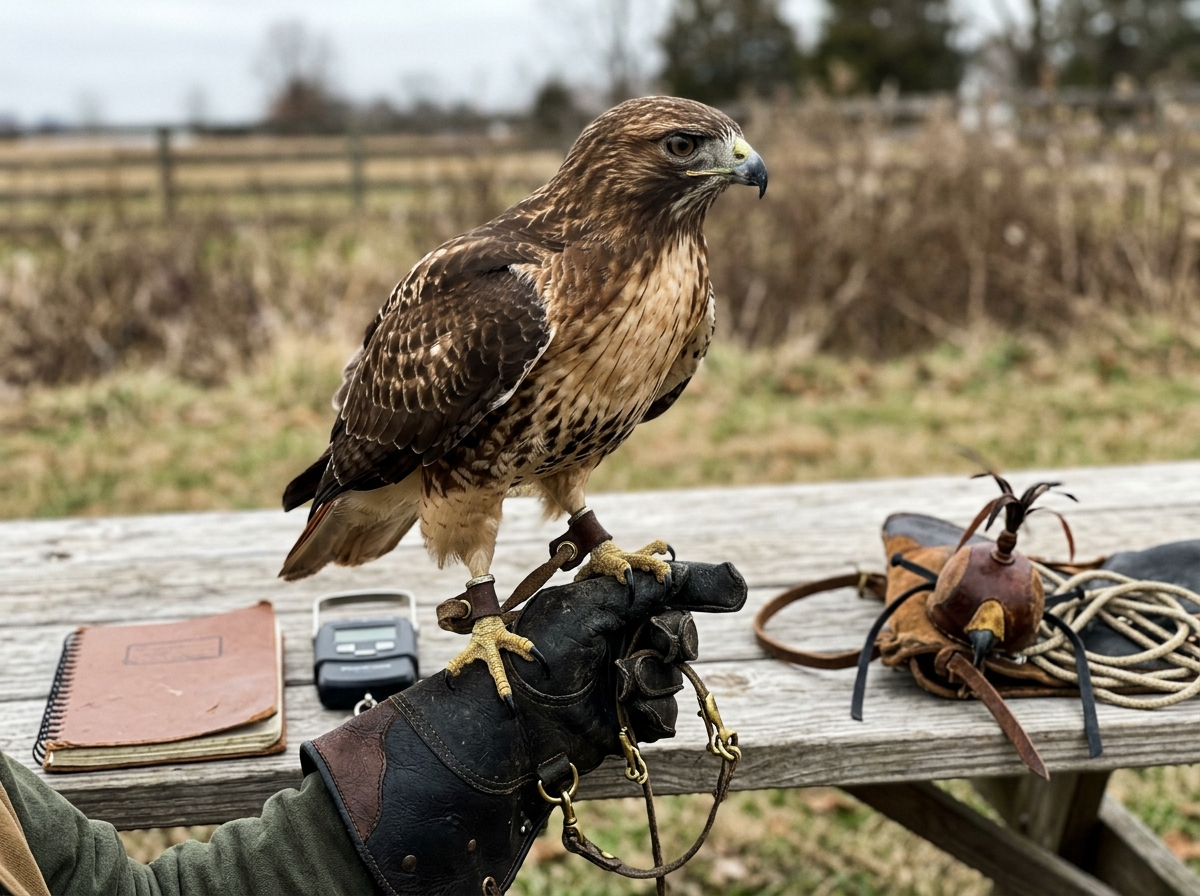
The Red-tailed Hawk is the species most falconry apprentices start with, and there's a very good reason for that. It's robust, it tolerates the handling mistakes that new falconers inevitably make, it's widely available across most of the U.S. via wild trapping (legal under apprentice permits in most states), and it hunts squirrels and rabbits, which are the bread-and-butter quarry for a new falconer learning to read their bird in the field. The Red-tail is forgiving when your weight management is slightly off, which is not something you can say about falcons. It weighs roughly 700 to 1,400 grams depending on sex, so a female (called a 'formal' or 'haggard' if wild-caught) will be larger and generally more capable for hunting.
American Kestrel: great for limited space, harder to manage
The Kestrel is the smallest falcon in North America and a legitimate option if you live somewhere that a large hawk's housing is impractical. They're also legal for apprentices in most states. The catch is that Kestrels are extremely weight-sensitive. A gram or two off and you have a bird that won't fly to the lure. Another gram too light and you have a bird at risk of a health crash. They hunt smaller quarry (sparrows, large insects, small mice), which limits the hunting experience somewhat compared to a Red-tail. If your goal is to learn the mechanics of falconry with a smaller footprint, a Kestrel works. If your goal is to hunt meaningfully in your first season, a Red-tail is more practical.
Harris's Hawk: the easiest to train, but with a catch
Harris's Hawks are arguably the most trainable raptor for beginners. They're naturally social (they hunt in cooperative groups in the wild), they bond well with humans, and they're far more forgiving than falcons or even Red-tails when training steps are rushed or inconsistent. The issue is availability and geography. They're native to the American Southwest, and captive-bred Harris's Hawks can be expensive ($800 to $1,500 or more from a reputable breeder). Some states also restrict apprentices to wild-trapped native species, which would rule out a captive-bred Harris's depending on your state's regulations. Check your specific state regulations before you fall in love with this option.
Getting your bird legally and responsibly
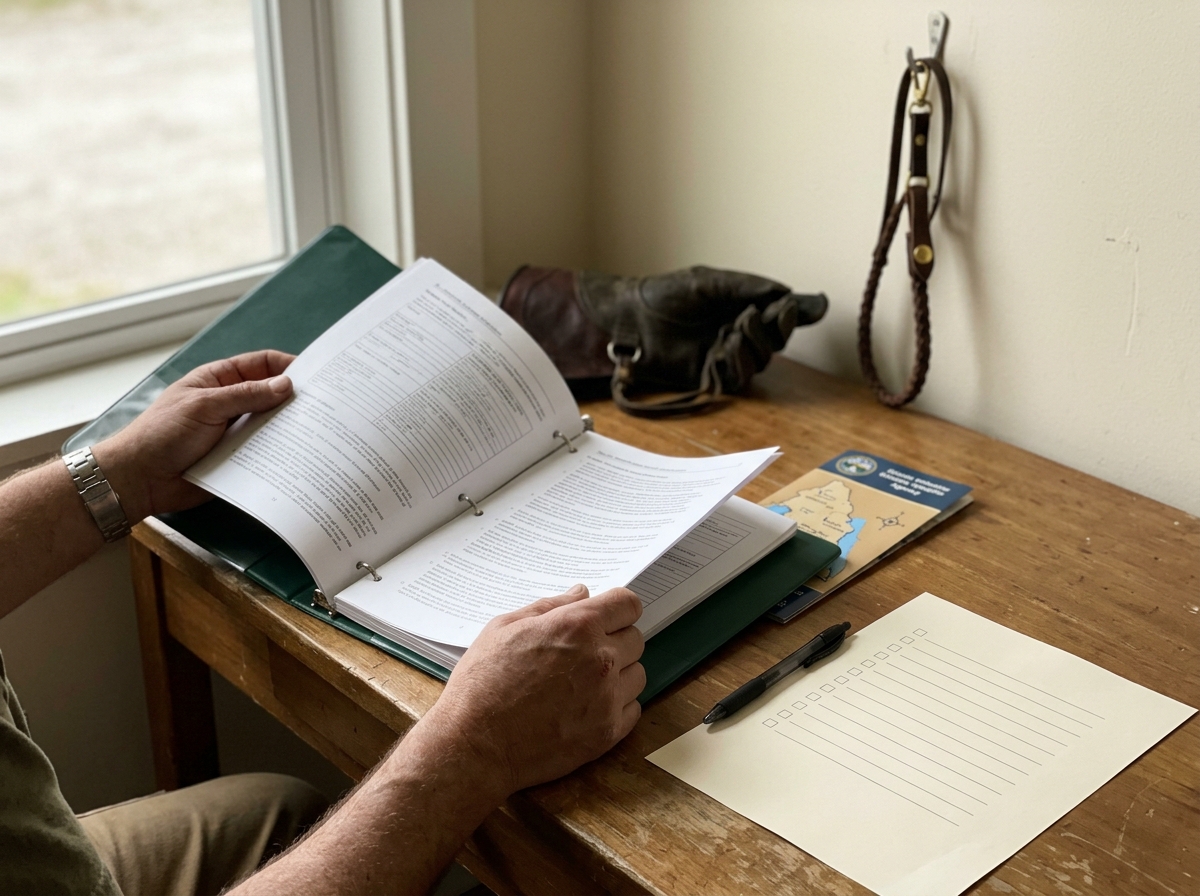
This is where most beginners stall out, and honestly it's the most important part to get right before anything else. Acquiring a raptor without the proper permits is a federal offense under the Migratory Bird Treaty Act. There's no gray area here. The process takes time, but it's not as complicated as it sounds once you break it into steps.
- Contact your state wildlife agency and request the falconry regulations packet. Every state has its own rules layered on top of federal minimums.
- Study for and pass the state falconry exam. Most states require a score of 80 percent or higher. The exam covers raptor biology, husbandry, equipment, and applicable laws.
- Find a licensed sponsor (a General or Master falconer willing to mentor you). The North American Falconers Association (NAFA) and your state falconry club are the best places to connect with mentors.
- Build your housing (mews or weathering area) and have it inspected and approved by your state wildlife agency before you acquire a bird.
- Once your permit is issued, you can legally trap a wild bird during the approved trapping season or acquire a captive-bred bird from a licensed falconry breeder. Captive-bred birds from breeders are available year-round; wild trapping is seasonal.
- Register the bird with your state within the required timeframe (typically 10 days) after acquisition.
Realistically, from the moment you decide to pursue falconry to the moment you have a legal bird on your fist, expect 6 to 18 months. That's not a reason to be discouraged. That timeline includes exam prep, sponsorship, housing inspection, and the trapping or acquisition window. Use that time to read, shadow your sponsor in the field, and build your equipment properly.
Housing, setup, and what you need to provide every single day
A raptor is not a bird you put in a cage in your bedroom. The primary housing for a falconry bird is called a mews (an indoor/shelter structure) and an outdoor weathering area where the bird can be tethered safely and exposed to natural light and weather. Most state regulations specify minimum dimensions. A general rule for a Red-tailed Hawk mews is at least 8 feet by 8 feet by 6 feet tall, with a secure latch, smooth interior walls (no protrusions the bird can catch a foot or wing on), and a perch at an appropriate height.
Ventilation is critical and gets underestimated constantly. Raptors produce fine feather dust and their droppings (called 'mutes' in falconry) dry and become airborne. A poorly ventilated mews creates respiratory problems for the bird and for you. The space needs cross-ventilation without drafts directly on the perch. Think screened vents near the top of the structure and airflow that moves through the room, not across the bird.
Beyond the physical structure, here's what the daily routine actually looks like. There are no days off when you own a falconry bird.
- Weigh the bird every morning before feeding, at the same time each day, to track hunting weight and health trends
- Clean the mews and perch area daily (mutes and food scraps attract flies and bacteria fast)
- Check jesses, anklets, and swivel hardware for wear or damage
- Provide fresh water for bathing at least every other day, and clean the bath container after each use
- Fly or exercise the bird daily during the training and hunting season, which in practice means taking it out to the lure or into the field
- Record daily weight, feeding amounts, and any behavioral observations in a log (also required by most state permits)
If that daily list sounds like a lot, it is. A falconry bird averages 1 to 2 hours of hands-on time per day minimum, and during active hunting season that can easily become 3 to 4 hours. This is a sport, not a hobby you can pause for a week when life gets busy.
Feeding and training: the core loop of falconry
Weight management and conditioning
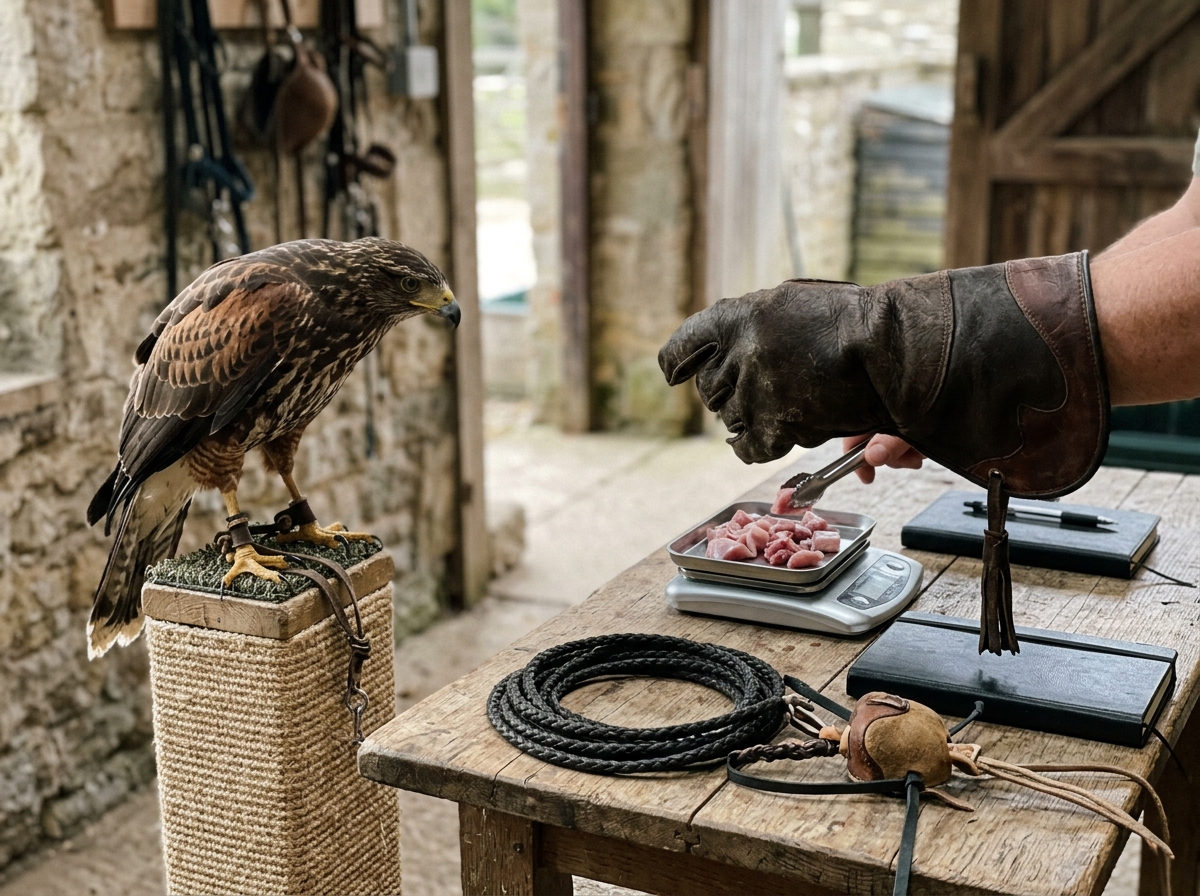
Falconry training is built entirely around food motivation. A raptor's willingness to work with you is directly tied to its 'flying weight,' which is a controlled reduction from its full, comfortable weight. This sounds harsh to newcomers, but it's not starvation. It's more like the difference between a dog that will work for treats after dinner versus a dog that's genuinely interested before dinner. The bird at flying weight is alert, motivated, and engaged. The bird at full weight is often disinterested in returning to the fist or lure.
Finding a bird's flying weight takes weeks of careful observation. You weigh daily, fly, note the response, and adjust. A Red-tailed Hawk's flying weight is typically 50 to 100 grams below its 'yarak' weight (the weight at which it shows peak hunting drive and alertness). Every bird is individual. Diet for most beginner birds consists of quail, mice, chicks (day-old poultry chicks), and wild-caught quarry from hunts. Quail is the most commonly used training food because it's consistent, clean, and easy to portion. Feed after training sessions, not before.
Training progression for a first-year bird
The training sequence for a new falconry bird follows a logical progression. Rushing any step is one of the most common mistakes beginners make. Here's the basic arc:
- Manning: Getting the bird comfortable sitting on the gloved fist without bating (jumping off in panic). This can take days to weeks depending on the bird's temperament and whether it's passage (wild-trapped) or captive-bred.
- Fist feeding: The bird eats its daily ration on the glove, building positive association with your presence.
- Recall to fist: Once the bird is calm on the fist, you introduce a short distance recall (1 to 2 feet) and gradually increase it over days, rewarding each return with a small food piece.
- Lure introduction: Introduce the lure (a weighted bundle of wings with food tied to it) so the bird learns to chase and catch a moving target. Start on a creance (long training line) before flying free.
- Free flight and recall: The bird flies to the lure or fist on call without a creance. This is the milestone most beginners are working toward in the first few months.
- Introduction to quarry: Once free-flight recall is reliable, you introduce the bird to actual hunting in the field.
Your sponsor should be present for as much of this as possible, especially the transition from creance to free flight. Losing a bird to a bad first free flight because you rushed the process is devastating, and it's entirely avoidable.
Mistakes beginners make (and how to not repeat them)
I'd rather you hear these now than learn them the hard way.
- Underestimating the daily time commitment: Falconry birds require daily attention 365 days a year. Many beginners plan for hunting season but don't account for the non-hunting months when the bird still needs exercise, weight management, and care.
- Building housing after getting the bird: Your mews must be inspected and approved before you acquire a raptor in most states. Build first, bird second.
- Poor ventilation in the mews: A closed or under-ventilated mews leads to aspergillosis (a deadly fungal lung infection) and other respiratory diseases. This kills birds quietly and quickly.
- Skipping training steps to get to free flight faster: Every skipped step is a gap in the bird's reliability. A bird that isn't ready for free flight and gets spooked by a dog or a car will simply leave.
- Inconsistent weighing: If you don't weigh daily at the same time, you have no reliable baseline. You're flying blind with a bird whose motivation and health you can't accurately read.
- Sourcing a bird illegally or from an unlicensed person: There is no 'under the table' option that ends well. Federal and state agencies take illegal raptor possession seriously. The fines are significant and the bird gets confiscated.
- Treating the bird like a pet: A falconry bird that becomes overly imprinted on humans (raised to identify with people rather than its own species, as defined under 50 CFR § 21.6) can become dangerously aggressive toward people during breeding season. This is a real welfare and safety issue, not a hypothetical one.
How to choose your first bird and what to do next
Here's a simple decision framework to help you pick the right first species before you go any further.
| Your Situation | Best First Choice |
|---|---|
| First-time falconer, open land access, want to hunt squirrel/rabbit | Red-tailed Hawk |
| First-time falconer, limited outdoor space or urban/suburban setting | American Kestrel |
| First-time falconer in the Southwest with strong mentor support and budget | Harris's Hawk |
| Unsure about commitment level, still researching | Do not acquire a bird yet — shadow a mentor first |
If you're still in the 'researching' phase, the most important thing you can do right now is not buy anything. Instead, take these concrete next steps in order to find the best first time bird to buy that fits your goals.
- Look up your state's falconry regulations on your state wildlife agency website and download the current permit requirements.
- Contact your state falconry club or the North American Falconers Association to find a local mentor or club meeting you can attend.
- Begin studying for the falconry exam using your state's recommended materials. NAFA publishes study resources, and many state clubs have prep guides.
- Start planning your mews location and dimensions based on your state's minimum housing requirements before you apply for your permit.
- Shadow your sponsor on at least a handful of actual flights before you decide which species feels right for your lifestyle and hunting environment.
- Once your permit is issued and housing is approved, acquire your first bird through a licensed falconry breeder or the legal trapping season for your state.
Falconry has a learning curve that is genuinely steep, but it's also one of the most deeply satisfying relationships you can build with a bird. The Red-tailed Hawk is the right starting point for most people, making it the best large bird for beginners in this context, it's forgiving, it's available, and it teaches you the fundamentals without punishing every small mistake. Get your licensing right, build your housing first, find a mentor who will actually hold you accountable, and you'll have a foundation that makes every season better than the last. pet bird for beginners. what is the best bird for beginners
FAQ
If I’m a complete beginner, can I start with a captive-bred raptor instead of a wild-trapped one?
In many states, beginners still need to acquire their first raptor through permitted channels, and some apprentice tiers may limit you to specific species. Even when captive-bred options are legal, rules can differ on whether they are allowed for apprentice permits and which documentation is required, so confirm before paying a deposit. Your sponsor can also tell you what paperwork your state expects (banding, invoices, or transfer forms).
Which is the safest first choice if I want to avoid flight or weight-management disasters?
A large hawk like a Red-tailed Hawk is often recommended because it is generally more forgiving of small errors, but “safer” does not mean “easy.” If you are prone to missing training days, traveling often, or struggling to track daily weights, you may be better postponing acquisition rather than switching species, because the core risk is inconsistent conditioning and incorrect flying weight.
Can I do falconry with an apartment or small backyard if I pick a kestrel?
Kestrels have a smaller housing footprint, but ventilation and secure weathering space still must meet state minimums, and you still need a proper mews plus an outdoor weathering area. Apartment living also raises practical issues like space for tethering, managing raptor dust and mutes, and keeping neighbors safe, so check your local zoning and state inspection requirements before committing.
How do I know whether Harris’s Hawk will be legal for me as an apprentice?
Legality depends on your state’s apprentice-species list and whether it restricts you to wild-trapped native species. Captive-bred Harris’s Hawks may be prohibited even if they are available commercially. Ask your licensing office or your sponsor to confirm the exact pathway for your tier before you contact breeders.
What happens if I accidentally miss a day or two of daily training and conditioning?
Small gaps can sometimes be managed, but the problem is not just “missing a session.” With flying weight work, extended breaks can change the bird’s response and health risk profile, and you may need to adjust the plan with your sponsor before continuing. The safest approach is to build a realistic schedule now, including how you will handle work travel, illness, or emergencies.
Is it ever okay to keep a raptor in a cage at first for convenience?
No, falconry birds are managed with approved housing (a mews plus weathering) and safe handling setups, not bedroom cages. Even short-term “cage waiting” can create issues with wing health, perch safety, and exposure to airborne feather dust if ventilation is inadequate. Your inspection process will typically require your mews to be built correctly before you get the bird.
Do I need to be able to legally trap my own quarry for a beginner season?
Not always, but you need a consistent, permitted source of quarry and training food. Many beginners use commercially available prey items like quail and mice for training, then supplement with what is legal and accessible during hunting season. The key is planning feed supply and storage logistics so you do not run out mid-training.
How do I choose between “learn the mechanics” (kestrel) and “meaningful hunting early” (Red-tail)?
If you want faster chances to practice larger-quarry hunting skills in your first season, Red-tails are typically more practical. If your priority is mastering fundamentals with a smaller housing and handling burden, kestrels can work, but the bird is highly sensitive to weight and flying response. Consider your ability to track daily weights and meet intensive routines, because that skill matters more than the bird’s size.
What is the most common beginner mistake that leads to losing a bird during early free flight?
The most frequent drivers are rushing the progression and poor first-response conditioning, often combined with inadequate preparation at the release area. Your sponsor guidance at the creance-to-free-flight transition is critical, and you should not treat that step as a “one-time try.” Plan for weather, lure setup, and a controlled environment so the bird has the best chance to return reliably.
Can I switch species later if my first bird is not working out?
Sometimes, but it usually is not a quick or casual swap. Species changes can affect your required equipment, housing inspection status, permitted acquisition method, and what your sponsor and licensing tier will allow. If you are unsure, decide before acquiring your first bird, and use your sponsor to evaluate whether the issue is the species choice or the training routine and consistency.
Next Article
Best Large Bird for Beginners: Top Picks and Setup Tips
Pick the best large bird for beginners with setup, noise and mess realities, plus diet and training essentials.