The best bird for a first-time owner is a budgerigar (budgie). That's the short answer. They're small, affordable, reasonably quiet, genuinely affectionate when socialized well, and forgiving enough that beginner mistakes won't immediately cost you. But whether a budgie is the right bird for you specifically depends on a few real lifestyle factors, and there are several other solid options worth knowing about. This guide walks you through everything: how to figure out which bird fits your actual life, honest species comparisons, what to set up before your bird arrives, daily care, and the mistakes most beginners make in the first few months.
Best Bird for First-Time Owners: Pick the Right Beginner Species
Marcus Chen
23 Mar 2026
How to choose a beginner-friendly bird (your lifestyle checklist)

Before you fall in love with a species online, run through this checklist honestly. The wrong bird for your lifestyle won't just be inconvenient, it can be genuinely stressful for both of you. The wrong bird for your lifestyle won't just be inconvenient, it can be genuinely stressful for both of you.
Time commitment
Birds are not low-maintenance pets. Even a budgie needs daily interaction, fresh food and water, and out-of-cage time to stay mentally healthy. If you work long hours and live alone, a single bird will struggle. In that situation you either need a pair (so they entertain each other) or a species that handles more solitude. Cockatiels and budgies in pairs are a good fit for busy owners. Larger parrots like conures, caiques, or African greys need several hours of direct daily interaction and will not thrive in a hands-off setup.
Noise tolerance (yours and your neighbors')

This is the factor people most often underestimate. Cockatiels whistle and chirp; the noise is pleasant to most people. Budgies chatter at a medium volume. Conures, on the other hand, produce a piercing screech that carries through walls and can be a genuine problem in apartments. If you live in a shared building or have a low noise tolerance, stick to budgies, cockatiels, or finches.
Budget (upfront and ongoing)
The purchase price of the bird is often the smallest expense. Factor in a proper cage, perches, toys, food, and a first vet visit with an avian veterinarian. Small birds like budgies and finches are genuinely affordable across all those categories. Mid-size birds like cockatiels cost more upfront but are still manageable. Large parrots (macaws, cockatoos, African greys) carry a high purchase price and ongoing costs to match, plus decades of commitment.
Space available
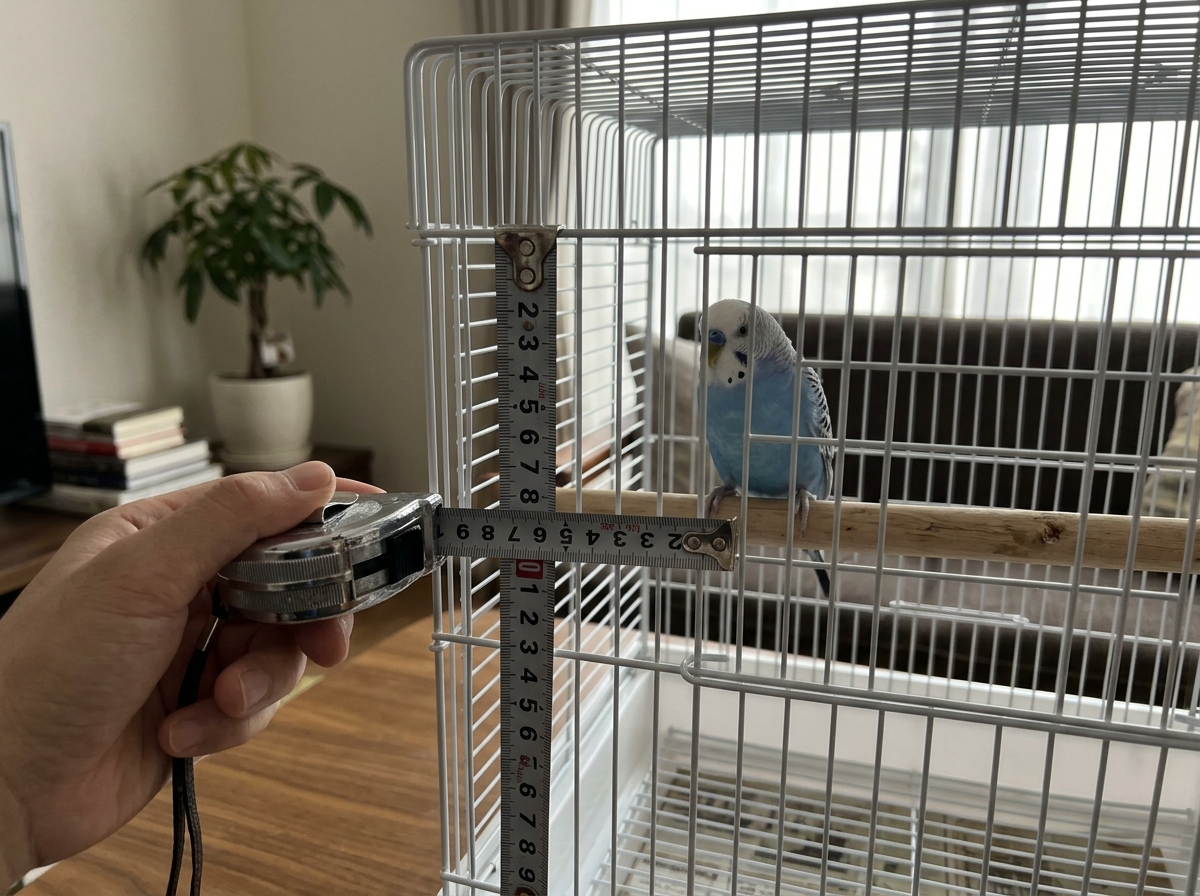
Bigger birds need bigger cages, and cages take up real floor space. A budgie or finch cage fits comfortably in a studio apartment. A cage suitable for a conure or African grey is a significant piece of furniture. Think about where the cage will actually go before deciding on a species.
Housemates and other pets
Cats and birds are a dangerous combination, even if your cat seems disinterested. Cats carry bacteria in their saliva that can be lethal to birds from even a minor scratch. Dogs vary widely. Small children can be unpredictable around birds, which stresses the bird and can lead to bites. If you have other birds already, any new bird needs a proper quarantine period before being introduced, a step that avian vets strongly recommend to prevent spreading illness.
Long-term commitment
A budgie lives 7 to 10 years with good care. A cockatiel can reach 20 years. African greys and large macaws can live 50 to 80 years. This is not a small consideration. A bird you adopt in your 30s might outlive you. Be realistic about where you'll be in 10, 20, or 30 years before choosing a long-lived species.
Top bird species for first-time owners
These are the species I'd genuinely recommend to a new bird owner, ranked roughly from most to least beginner-friendly. Each has real tradeoffs worth knowing.
Budgerigar (budgie)
The budgie is my top pick for most first-time owners. They're small (around 7 inches long), relatively quiet, and can learn to mimic words and whistle tunes. Hand-raised budgies become genuinely affectionate and will happily sit on your shoulder or finger. They're also affordable to house and feed. Hand-raised budgies become genuinely affectionate and will happily sit on your shoulder or finger. They're also affordable to house and feed. The main downside is that they do need daily social time, and a lone budgie left without interaction can become depressed. If your schedule is tight, get two so they keep each other company.
Cockatiel
Cockatiels are the most popular pet bird in the United States for good reason. They're affectionate, moderately quiet (the whistle is actually pleasant), large enough to handle comfortably, and generally forgiving of beginner mistakes. They tend to bond strongly with their owners. The tradeoff is that they produce a fine feather dust that can be an issue for people with respiratory sensitivities, and they need consistent daily interaction to stay well-adjusted, It’s important to choose the best large bird for beginners that fits your schedule. Cockatiels live 15 to 20 years, so this is a real commitment.
Finches and canaries
If you want a bird that's beautiful to watch and listen to but doesn't need to be handled, finches and canaries are the right choice. They're hands-off by nature, meaning they prefer the company of other finches over human interaction, but they're easy to care for and very low stress. They're ideal for people who travel occasionally, have limited time, or just want to enjoy a bird without the training commitment. The downside: don't expect them to sit on your finger or bond with you the way a parrot species will.
Parrotlet
Parrotlets are tiny (about 5 inches) but have enormous personalities. They can be feisty and territorial, especially if not socialized consistently, but a well-handled parrotlet is bold, playful, and entertaining. They're quieter than most parrot species, which makes them apartment-friendly. They do require daily handling to stay tame, so they're not a great fit if your schedule is inconsistent.
Lovebird
Lovebirds are small, colorful, and full of energy. They can become very bonded to their owners if handled daily from a young age. The common myth is that they must be kept in pairs, but a single lovebird that gets plenty of human interaction does just fine. In pairs, they tend to bond to each other and become less interested in humans. They can be nippy if undertrained, so consistent gentle handling matters.
| Species | Size | Noise Level | Lifespan | Handling Need | Best For |
|---|---|---|---|---|---|
| Budgie | Small | Low–Medium | 7–10 years | Daily | Most beginners |
| Cockatiel | Medium | Low–Medium | 15–20 years | Daily | Social, hands-on owners |
| Finch/Canary | Small | Low | 5–10 years | Minimal | Busy or hands-off owners |
| Parrotlet | Small | Low–Medium | 15–20 years | Daily | Apartment dwellers |
| Lovebird | Small | Medium | 10–15 years | Daily | Active, consistent owners |
Birds that seem good but aren't ideal for most beginners
Pet stores and social media make certain species look approachable. Some of them really aren't, especially for a first-time owner. Here's what to watch out for.
Conures
Conures are charming, playful, and popular, but their noise level is genuinely extreme. Sun conures in particular produce a scream that's been compared to a smoke alarm. They need hours of daily interaction and can develop screaming and biting habits if undertrained or under-stimulated. Not impossible for a beginner, but you need to go in with realistic expectations and a high noise tolerance.
African greys
African greys are often called the smartest pet bird, and that's part of the problem. A highly intelligent bird that gets bored, under-stimulated, or improperly socialized can develop serious behavioral issues including feather destructive behavior, excessive screaming, and aggression. They live 40 to 60 years, require a specialized diet, and need complex enrichment daily. This is not a beginner bird.
Cockatoos
Cockatoos are incredibly affectionate, which is exactly what makes them difficult. They need near-constant companionship and can develop severe separation anxiety if their social needs aren't met, leading to feather destruction and loud screaming. They're also large, powerful, and can inflict serious bites. Experienced bird owners love them; beginners often find them overwhelming.
Macaws
Macaws are stunning and can be wonderful companions, but they're simply too much bird for a first-time owner in most situations. They're loud enough to disturb neighbors in separate buildings, they require large enclosures, specialized diets, and a very high level of daily interaction. Their beaks can cause serious injury. The purchase price and ongoing costs are also substantial.
Doves (a note in the other direction)
Doves are actually underrated for beginners. They're gentle, quiet, and easy to care for, but they don't get the same marketing attention as parrots. If you want a calm, low-drama first bird that you can handle gently, a ringneck dove is worth looking into.
Essential setup and equipment for your first bird
Have everything ready before your bird comes home. Setting up after the fact while a stressed bird is in a temporary carrier is not how you want to start. Here's what you actually need.
The cage
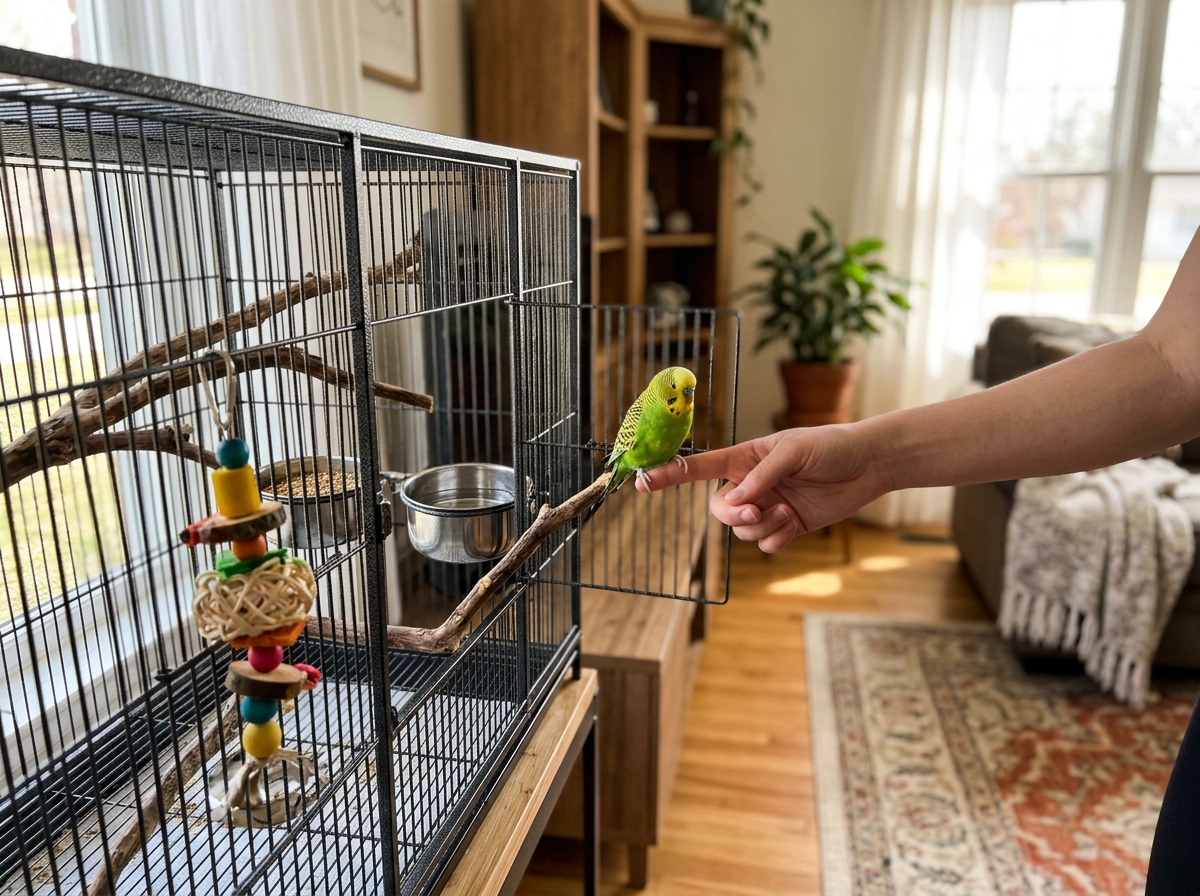
Bigger is better, with one important caveat: bar spacing has to be safe for your bird's size. For budgerigars, cockatiels, lovebirds, and parrotlets, you want a minimum cage size of 20 x 20 x 30 inches with bar spacing no wider than 0.5 inches. Wider bar spacing can trap a small bird's head, which is a genuine injury and death risk. For a single budgie or cockatiel, aim for as large a cage as your space allows, not the minimum.
Cage placement
Place the cage in a room where the family spends time, so the bird feels part of the household, but not in a kitchen. Kitchens are dangerous for birds: non-stick cookware (PTFE/Teflon) releases fumes when overheated that can kill a bird within minutes. Drafty areas, spots near heating vents, and locations with direct all-day sun exposure are also poor choices. One wall against the cage gives the bird a sense of security.
Perches
Most cages come with smooth plastic dowel perches, which are actually the worst option. Birds stand on perches all day, and varied perch diameters and textures keep their feet healthy and prevent pressure sores. Include at least one natural wood perch (manzanita or java wood are good), one rope or soft perch, and one variable-diameter perch like a twisted branch. Sandpaper perch covers look like they'd help with nail grooming but actually damage the feet; skip them.
Food and water setup
Use heavy ceramic or stainless steel dishes rather than plastic, which harbors bacteria and is harder to clean thoroughly. Place food and water dishes away from perches above them, since birds will poop in their water without hesitation. A bottle-style water dispenser can help keep water cleaner, though you still need to clean the bottle regularly.
Toys and enrichment
A bare cage is a form of deprivation. Birds need mental stimulation. Include at least two or three toys in rotation, covering different types: something to chew (soft wood or palm leaf), something to forage (a toy with hidden treats), and something to manipulate (bells, rings, foot toys). Rotate toys every week or two so they stay interesting. Don't overcrowd the cage; the bird still needs to fly from perch to perch.
Cage liner and hygiene basics
Paper-based cage liners (or plain newspaper) are the easiest and safest cage bottom option. They let you see droppings clearly, which helps you spot health changes early. Avoid scented liners, cedar shavings, or corncob bedding. A simple paper liner swap takes 30 seconds daily.
Daily care basics
Feeding routine
A seed-only diet is one of the most common beginner mistakes. Seeds are high in fat and low in essential nutrients; they're like feeding a child only potato chips. The foundation of a healthy bird diet is a quality pelleted food, supplemented with fresh vegetables, leafy greens, and limited fruit. Fresh foods should make up around 20 to 30 percent of the diet for most small parrot species. Avocado, chocolate, caffeine, alcohol, and onions are toxic to birds and should never be offered.
Cleaning cadence
- Daily: swap the cage liner, refresh food and water, wipe any obvious mess from perches or dishes
- Weekly: scrub all dishes, perches, and cage bars with hot water and a bird-safe cleaner
- Monthly: deep-clean the entire cage, including the tray and grate, and inspect toys for damage or wear
Sleep requirements
Birds need 10 to 12 hours of sleep per night, in a dark and quiet environment. Sleep deprivation is a real health issue in pet birds and contributes to behavioral problems, immune suppression, and irritability. If your household stays active late into the night, consider a breathable cage cover or moving the cage to a quieter room at bedtime.
Handling and training
Start with short, calm sessions and let the bird set the pace. The 'step up' command (asking the bird to step onto your finger) is the foundation of all handling and training. Use positive reinforcement: a small treat or verbal praise when the bird does what you're asking. Never punish a bird for biting or not complying; it damages trust and makes everything harder. Daily 10 to 15 minute training sessions are more effective than occasional long ones.
Out-of-cage time and enrichment
Most birds benefit from at least one to two hours of supervised out-of-cage time daily. This is when they exercise, explore, and bond with you. Before letting the bird out, bird-proof the room: close windows and doors, cover mirrors, remove toxic plants, turn off ceiling fans, and secure any hazards. Out-of-cage time doesn't have to be structured; even sitting near you while you work counts.
Common beginner mistakes and how to avoid them
I've seen these patterns come up again and again, both in my own experience and in conversations with new bird owners. Most are avoidable if you know to look for them.
- Buying a cage that's too small: The minimum cage size is a floor, not a target. If you can afford more space, give it. Birds live in their cages the majority of their lives.
- Using non-stick cookware in the kitchen: PTFE fumes from overheated non-stick pans have killed birds with no warning. If you have birds, switch to stainless steel or cast iron in the kitchen.
- Feeding seeds as the main diet: Seeds are a treat, not a staple. A pellet-and-fresh-food diet is the standard of care, and transitioning a seed-addicted bird takes time and patience.
- Skipping the avian vet: A general vet doesn't have the training to properly assess a bird. Find an avian veterinarian before you bring the bird home, and schedule a first wellness visit within the first week. The CDC recommends working with a vet experienced with pet birds from the start.
- Placing the cage in a drafty or smoky area: Birds have highly sensitive respiratory systems. Scented candles, air fresheners, cigarette smoke, and aerosol sprays can cause serious respiratory damage. Keep the bird's environment as clean-aired as possible.
- Expecting immediate tameness: A newly homed bird is stressed and disoriented. Give it several days to settle before starting handling. Rushing the process creates fear responses that take months to undo.
- Under-enrichment: A bored bird will scream, feather-pick, or develop other problem behaviors. Rotate toys, provide foraging opportunities, and make sure out-of-cage time is a daily priority.
- Ignoring quarantine rules when adding a second bird: If you already have a bird and are adding a new one, keep the new bird in a completely separate room for 30 days and see an avian vet before any introduction. This is non-negotiable for disease prevention.
Next steps: where to get your bird and what to do before bringing it home
Where to get your bird
Reputable avian breeders are generally the best source for a first bird. A good breeder will have hand-raised, socialized birds, will let you visit and interact with the bird before purchasing, and will answer questions about the bird's history and diet. Bird rescues and adoption organizations are also a worthwhile option, especially for species like cockatiels and budgies that frequently need rehoming. Pet store birds are a more variable option: quality depends entirely on the individual store's practices, and many pet store birds are not hand-raised or properly socialized.
Questions to ask before you buy
- Is the bird hand-raised? (Hand-raised birds are significantly easier to tame and handle)
- What diet has the bird been on? (You'll need to transition gradually, not switch abruptly)
- Has the bird been seen by an avian vet recently?
- What is the bird's age? (Younger birds are generally easier to train)
- Can you see the bird interacting with humans before purchasing?
Your pre-arrival checklist
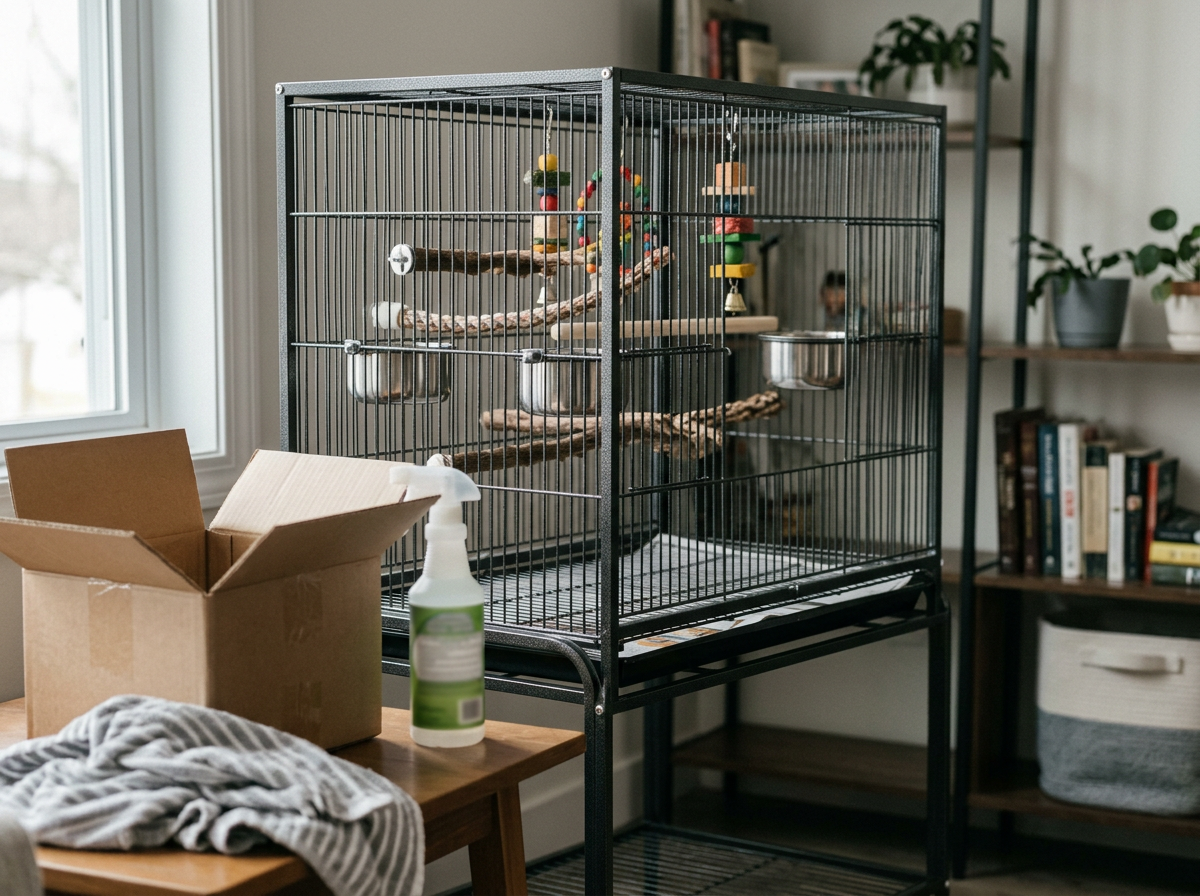
- Set up the cage completely, with perches, toys, food, and water, before the bird arrives
- Identify and contact an avian veterinarian in your area; book the first wellness visit
- Remove or secure all household hazards: non-stick cookware, toxic plants, open water sources, and escape routes
- Purchase at least two weeks' worth of the same food the bird was eating previously, to allow a gradual diet transition
- Choose and prepare a quiet, low-traffic spot for the first few days while the bird acclimates
- Inform everyone in the household about handling rules before the bird comes home
The first week is about letting the bird adjust, not about training or showing it off. Keep things calm, consistent, and predictable. Talk softly near the cage, offer food from your hand, and let the bird set the pace for interaction. If you do those things, you're already ahead of most first-time owners. Once you've got the basics dialed in, you can start exploring more about species-specific care, diet optimization, and enrichment strategies to really give your bird a great life.
FAQ
How do I know whether I have enough time for the best bird for a first-time owner?
If you cannot commit to daily out-of-cage interaction and frequent social time, a “tame” parrot-style bond is unlikely. In that case, consider keeping a pair of the species you choose (so they have social stimulation) or choose a hands-off bird like finches rather than relying on weekends-only handling. A single bird left alone for long stretches often becomes less trusting and can develop stress behaviors.
What should I do during the first week after bringing my new bird home?
Treat the first arrival like a health and trust reset. For the first 7 to 14 days, focus on calm presence, gentle hand-feeding, and consistent routines, avoid forcing step-up, and keep lights and noise predictable. If you notice repeated labored breathing, persistent tail bobbing, or very watery droppings, contact an avian vet promptly rather than waiting for “adjustment.”
How should I start step-up training without stressing my bird?
For most small companion birds, plan on “minimum viable” daily handling only after the bird voluntarily approaches you. Use step-up training for 10 to 15 minutes at a time, stop while the bird still seems comfortable, and offer tiny rewards immediately when it cooperates. If the bird fluffs up, pulls away hard, or panics, you should pause and try again later rather than repeating the command.
What’s the best way to handle biting in the first few months?
If your bird bites, the goal is to reduce the chance it learns biting works as a way to end interaction. Stay calm, do not punish, and immediately stop the session if the bird escalates, then resume later with shorter, easier practice (for example targeting or hand-feeding) at a time the bird is calmer. Many “random” bites are actually fear, overstimulation, or a response to sudden reaching.
My bird won’t eat pellets or fresh food, what should I change first?
You can keep a bird’s diet on track without turning it into a daily argument. Offer pellets as the main food, then add fresh items at the same time each day, removing leftovers after a set window so it stays consistent. If the bird refuses vegetables, try smaller cuts, mix vegetables into foraging toys, and switch preparation style (chopped vs shredded) rather than giving only one option every day.
What health signs should I treat as urgent in a new bird?
Signs like quiet sitting can be normal, but “illness risk” patterns include decreased appetite, swollen crop, fluffed posture for long periods, very dirty or foul-smelling droppings, or sudden changes in vocalization. Birds also hide symptoms, so use your daily normal baseline as a reference. If any red-flag symptoms show up, an avian veterinarian is the right next step, ideally the same day if breathing looks off.
Are paper cage liners always safe, and how often should I change them?
A paper liner is usually safest, but you still need to manage what the bird can access. Use plain paper that does not have inks or fragrance, change it frequently, and ensure the bird cannot ingest long fibers. Also, avoid leaving soiled liners in place for more than a day, because damp droppings increase odor and can worsen hygiene quickly.
What are common mistakes that cause sleep problems in pet birds?
Yes, sleep quality can be ruined by small household factors. Aim for an uninterrupted dark, quiet period, and make sure the cage cover is breathable so air flow is not blocked. If your household uses bright screens late at night or people talk loudly nearby, relocate the cage to a quieter room or improve the schedule so bedtime is consistent.
If I already have a bird, how should quarantine work for a new one?
Don’t introduce birds on the same “day one” basis. Quarantine means separate airflow and strict hygiene, meaning no sharing of perches, bowls, or tools, and handwashing between birds. Plan a dedicated vet check for any new bird and follow an avian-vet recommended quarantine duration before any supervised contact.
What should I consider if I live in an apartment or shared building?
The best first-bird choice can change if you rent or have neighbors close by. A conure or other loud species may create ongoing conflict, even if the bird seems manageable at first. If noise tolerance is low, prioritize species known for lower volume and consider placing the cage in the most insulated room available to you.
Besides non-stick cookware, what other household hazards should I watch for?
Nontoxic is not the same as bird-safe in practice. Even if a surface is “clean,” fumes are the bigger risk, especially from overheated nonstick cookware and some aerosols. Also, avoid strong air fresheners, essential oil diffusers, and self-cleaning oven cycles, and keep ceiling fans and drafts away from the cage.
Next Article
Best Bird for Beginner Falconry: Pick the Right First Option
Choose the best beginner falconry raptor with side-by-side care, training, sourcing, permits, and a quick decision check