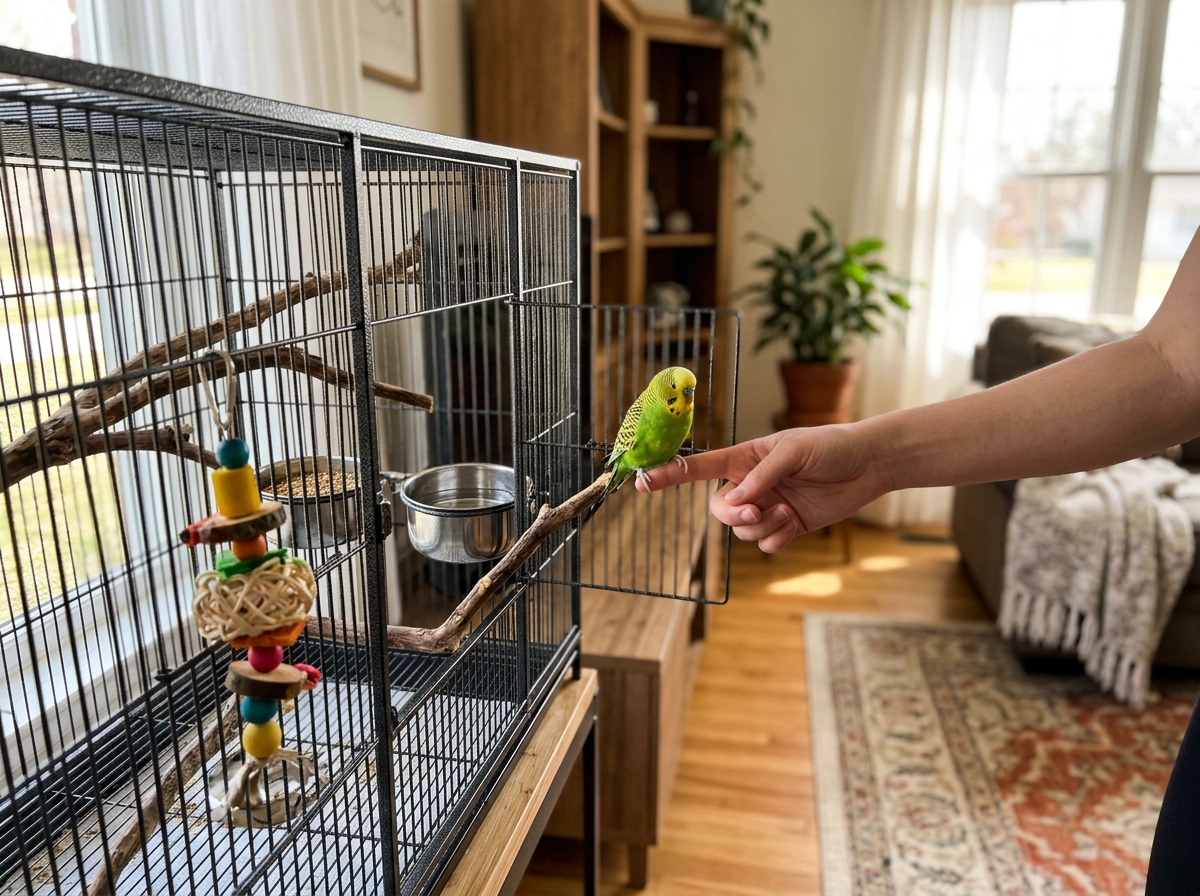
The best pet bird for a beginner is a [budgie](/gifts-for-bird-lovers/best-first-time-bird-to-buy) (also called a parakeet). Full stop. They're small, they're affordable, they're genuinely affectionate with patient handling, and they live 10–12 years, long enough to be a real companion without the decades-long commitment of a large parrot. Cockatiels are a close second, especially if you want something a little more interactive right out of the gate. Everything else on the beginner list, canaries, finches, lovebirds, has a specific use case that may or may not fit your situation. This guide walks through all of them honestly, then gets into what you actually need to buy, how to set up their space, what their daily care looks like, and what most first-time bird owners get wrong in the first month.
Pet Bird for Beginners: Best Types and First Week Setup
What to think about before picking a bird
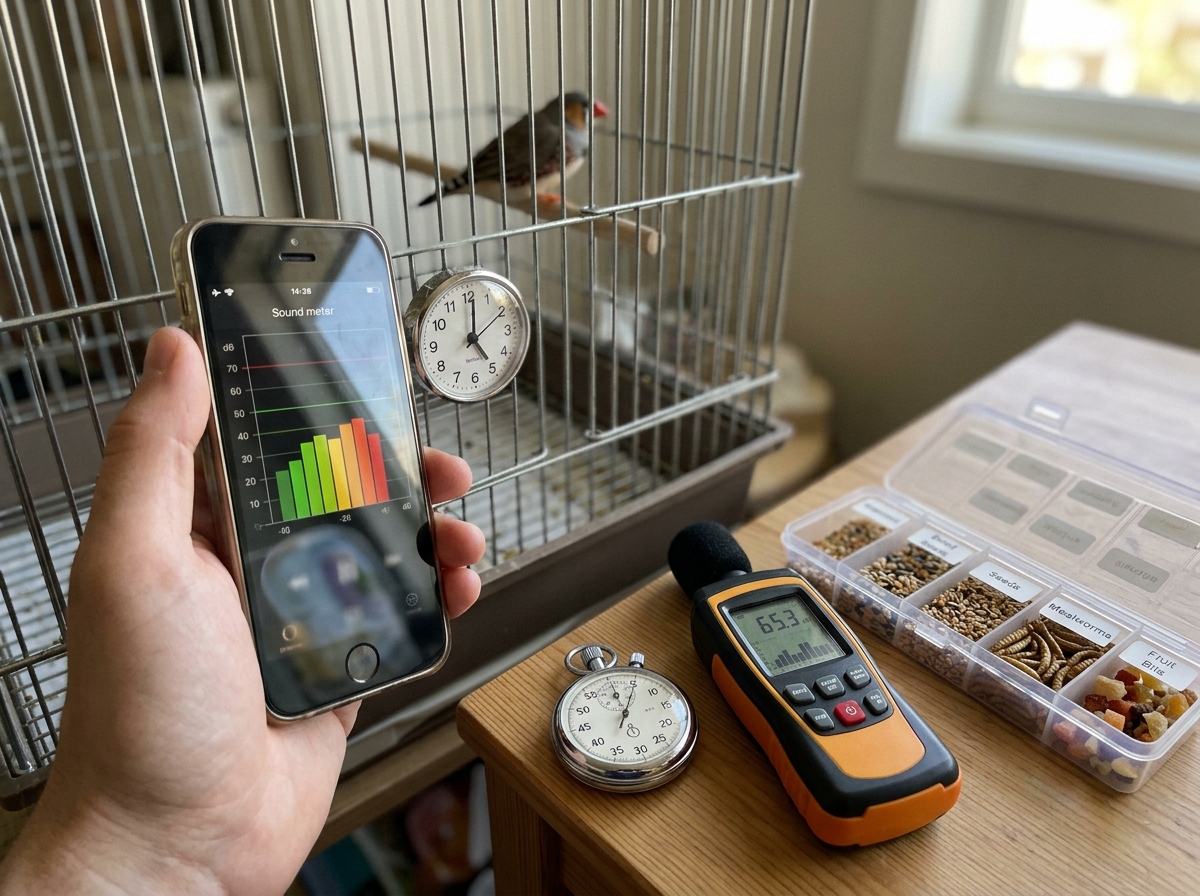
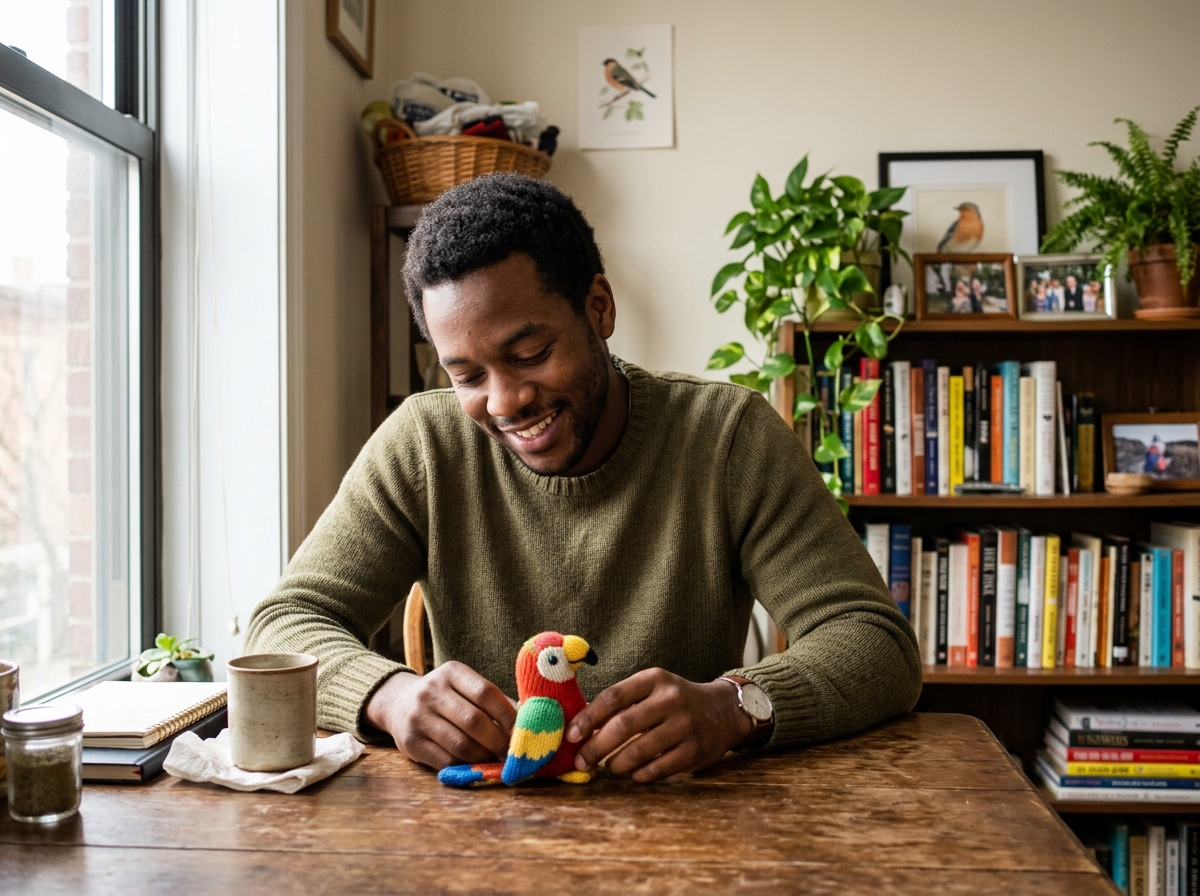
Before you zero in on a species, answer three questions honestly: How much daily hands-on time can you commit? How much noise can your household tolerate? And are you looking for a bird that bonds with you, or one that's more of a living display, beautiful to watch but not necessarily lap-pet material? Your answers will eliminate at least a few options before you even walk into a pet store or contact a breeder.
[Time](/gifts-for-bird-lovers/how-to-choose-a-bird) is the most underestimated factor. A canary or a pair of finches can thrive with minimal direct handling, they entertain each other and you watch them. A cockatiel or lovebird needs daily social interaction; if you skip it consistently, behavioral problems follow. A budgie sits somewhere in the middle, they can be kept solo and bonded closely to you, but that requires daily attention from your end as a substitute for a flock. If your schedule is genuinely unpredictable, consider either a pair of finches/canaries or two budgies rather than a single bird that depends on you for all social stimulation.
Noise level matters more than people expect. Cockatiels whistle and can be loud in the morning. Lovebirds have a sharp, high-pitched call. Canaries sing, beautifully, but persistently. Budgies chatter constantly but at a low, manageable volume. Finches are the quietest of the group. If you rent, have a baby, or work night shifts, noise is a real constraint worth taking seriously before you fall in love with a species at the pet store.
The best beginner bird types, what each is actually like
Budgies (parakeets)
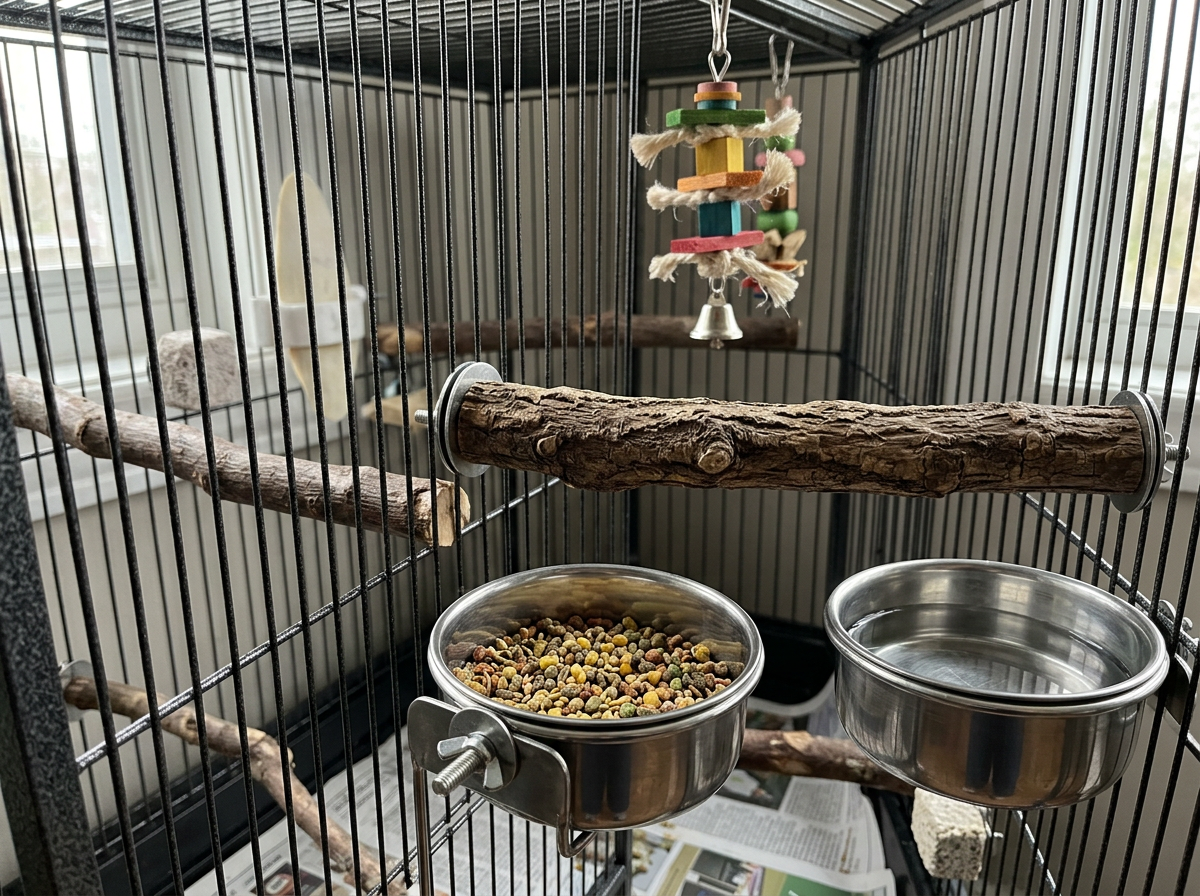
Budgies are the default recommendation for first-time bird owners, and the reason isn't just that they're small and cheap. They're genuinely smart, they can learn to talk, and a well-handled budgie will happily sit on your shoulder for hours. They live 10–12 years with proper care, which means you're making a real commitment, but not a 40-year one. They're forgiving of beginner mistakes in a way that large parrots aren't. Their cage requirements are manageable (more on sizing below), and their diet is straightforward. The main downside: a solo budgie needs significant daily interaction from you, or it gets bored and sometimes feather-destructive. If you can't do 30–60 minutes of active engagement daily, consider keeping two. best large bird for beginners
Cockatiels
Cockatiels are arguably the most affectionate beginner bird, they love being scratched, they'll fall asleep on your hand, and many learn to whistle songs on their own. They live 15–20 years, so this is a longer commitment than a budgie. They need daily social interaction with the people in your home to stay emotionally healthy. The upside is that cockatiels tend to be more naturally gentle and less nippy than lovebirds, which makes them great for households that include kids (with supervision). The downside is the "cockatiel dust", fine feather powder that coats everything near the cage and can aggravate allergies or asthma. If anyone in your home has respiratory sensitivities, that's worth knowing upfront.
Canaries
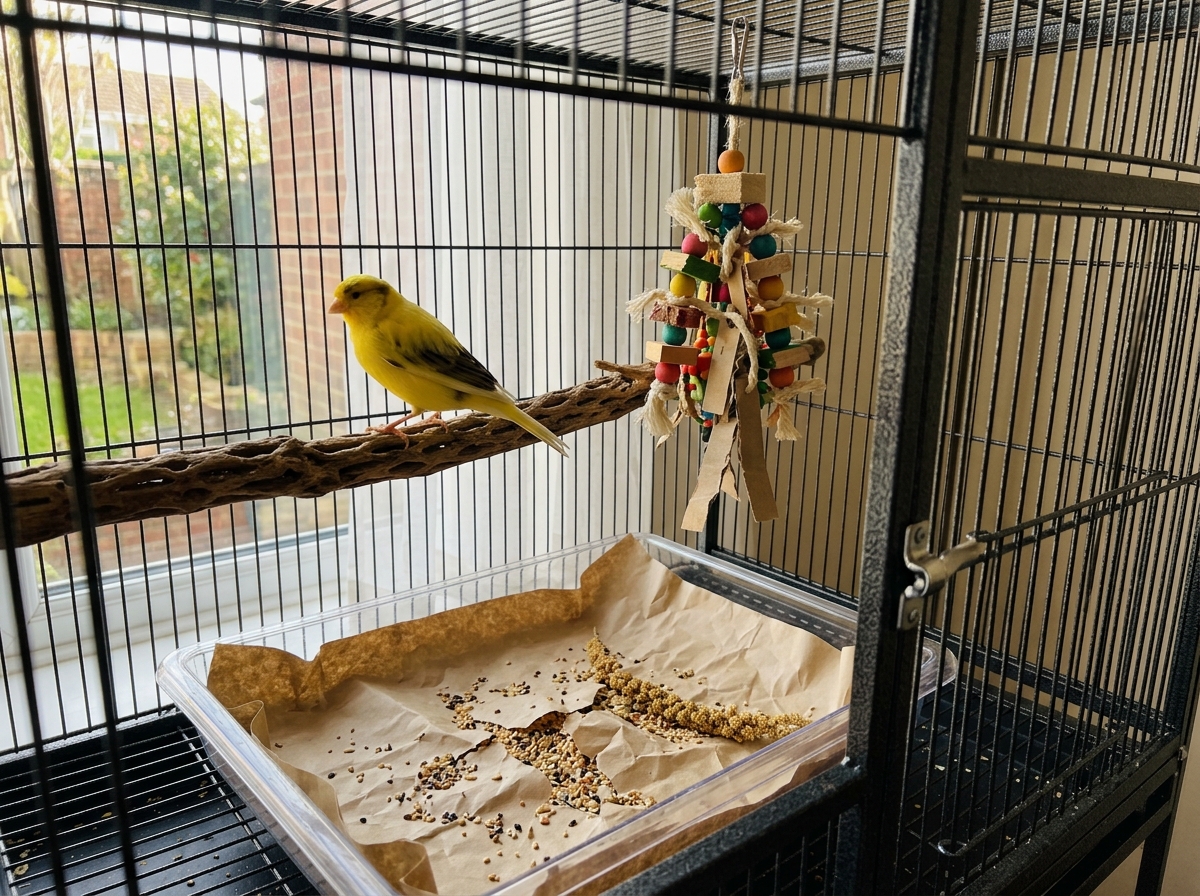
Canaries are ideal if you want a bird that enriches your home environment but doesn't need to be handled. Male canaries sing, genuinely one of the most pleasant sounds you can have in a room, and they live 10+ years (sometimes up to 15). They don't require daily hands-on interaction, which makes them a good fit for busy people or anyone who appreciates birds visually and audibly without wanting a pet that perches on them. The tradeoff: you won't get the bonding experience you would with a budgie or cockatiel. Canaries are also typically kept solo; two males will fight.
Finches
Finches (zebra finches and society finches are the most common beginner choices) are best kept in pairs or small groups. They're social with each other, very low-maintenance, and extremely quiet. They don't need or particularly want human handling, their entertainment comes from interacting with each other. If you want a low-effort, visually engaging pet that doesn't demand your time, a pair of finches is a genuinely excellent choice. The downside is that you're more of an observer than a participant.
Lovebirds
Lovebirds are often marketed as beginner birds, but they're better classified as "intermediate." They're feisty, personality-packed, and can be incredibly affectionate, but they can also be territorial and nippy, especially if not handled consistently from a young age. They live 10–15 years (sometimes up to 20), and they do best when kept in pairs. A single lovebird needs you to fill that social role, which requires significant daily time and consistency. Their diet should be based on a high-quality pelleted food making up at least 60–70% of what they eat. They're a great choice if you're committed and want an interactive bird, just go in with realistic expectations.
| Bird | Lifespan | Noise Level | Handling/Bonding | Best For |
|---|---|---|---|---|
| Budgie (Parakeet) | 10–12 years | Low (constant chatter) | High — bonds closely with daily interaction | Most beginners; best all-around starter bird |
| Cockatiel | 15–20 years | Moderate (whistles, calls) | Very high — affectionate and gentle | People who want a lap-bird and can commit long-term |
| Canary | 10–15 years | Moderate (beautiful song) | Low — watch, don't handle | Busy owners who want ambiance over bonding |
| Finches | 5–10 years | Very low | Very low — prefer bird companionship | Low-maintenance; best kept in pairs |
| Lovebird | 10–15 years | Moderate-high (sharp calls) | High — but needs consistency | Committed owners ready for a feisty personality |
What to buy before you bring your bird home
The cage
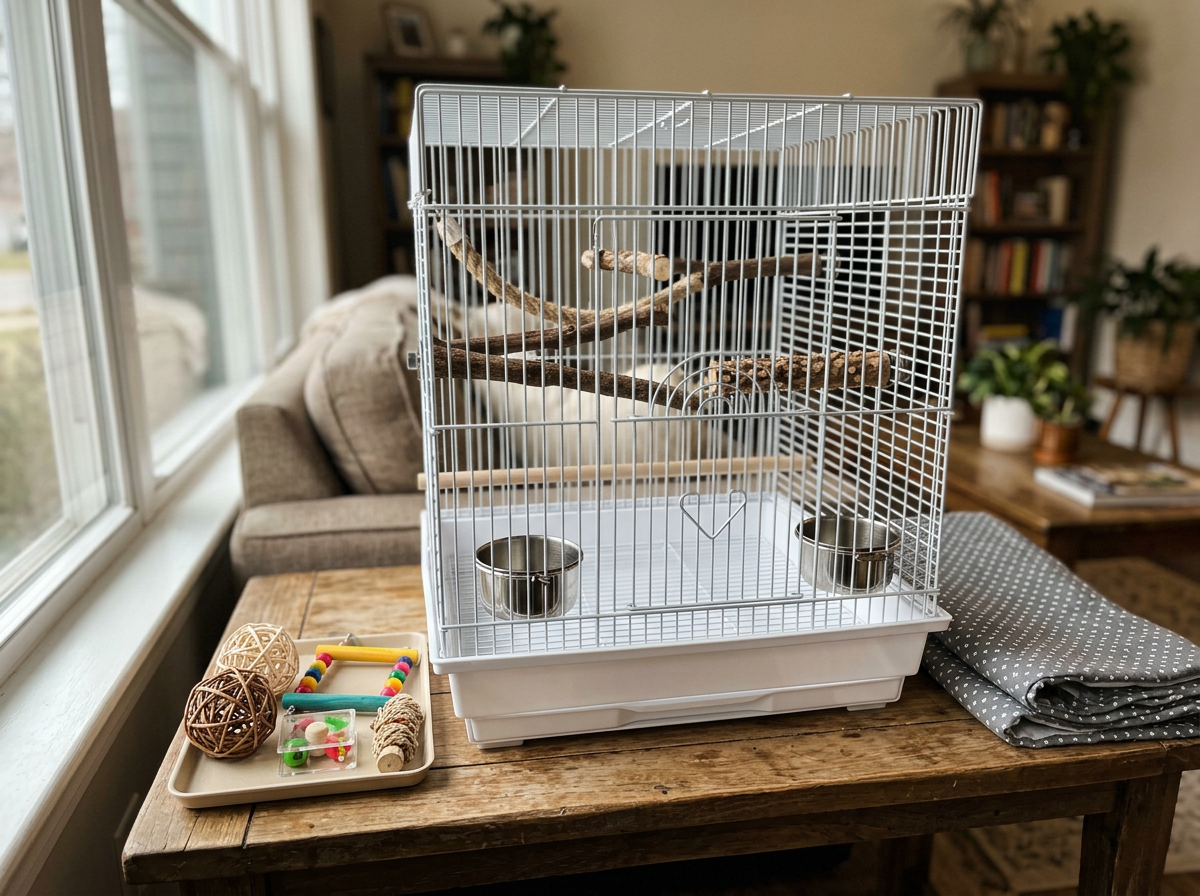
Cage size is the single most important purchase decision. The RSPCA minimum for a single budgie is 45cm x 45cm x 45cm (about 18 inches in each direction), but that's a floor, not a goal. Bigger is always better, your bird needs room to move horizontally, not just sit on one perch. Bar spacing for small birds like budgies and canaries should be around 3/8 inch (roughly 1 cm) so they can't get their heads stuck between bars. Avoid cages with a round footprint; they make it harder for birds to navigate and tend to lack corner perching spots where birds feel secure. For cockatiels, you'll want a larger cage, aim for at least 24 x 24 inches as a minimum floor size, with 1/2 to 5/8 inch bar spacing.
Perches
Your cage will come with plastic dowel perches. Replace at least two of them with natural wood perches of varying diameter, this exercises the feet and prevents pressure sores. Rope perches add variety and comfort. One important note: skip the sandpaper perch covers entirely. They're abrasive and can cause foot injuries; they don't substitute for proper nail maintenance.
Food and water dishes
Stainless steel or ceramic dishes are easier to clean and don't harbor bacteria the way plastic does over time. You'll need at least two, one for dry food (pellets/seed mix), one for water. A third dish for fresh fruits and vegetables is helpful. Water bowls need to be washed daily with soap, not just rinsed, rinsing alone doesn't adequately remove bacteria.
Food itself
Buy a quality pelleted food appropriate for your bird's species. Seeds are fine as a supplement or occasional treat, but they shouldn't make up the majority of the diet, they're high in fat and relatively low in nutrition. Many beginner birds are sold on an all-seed diet, and transitioning them to a pellet-based diet takes patience but is worth it for their long-term health.
Other supplies to have ready
- Cage cover (a dark, breathable fabric or purpose-made cover) for managing nighttime darkness
- Bird-safe toys: foraging toys, chew toys, swings — rotate them to prevent boredom
- A small travel/carrier cage for vet visits
- Cage liner (paper towels or unbleached paper work fine; avoid scented or cedar-based liners)
- A spray bottle for bathing — many birds enjoy a gentle mist
Setting up their space at home
Where to place the cage
Put the cage in a room where your household spends time, birds are social and do better when they're part of daily activity. A living room or family room works well. Keep the cage away from direct sunlight (it can overheat the bird quickly) and away from drafts, air conditioning vents, and exterior doors. The kitchen is the most dangerous room in the house for birds, and not just because of the obvious hazards like open water and hot surfaces. Fumes from non-stick cookware (Teflon and other PTFE-coated pans) are extremely toxic to birds and can be fatal even in low concentrations. Even burned oil or food creating particulate smoke is a risk. Keep birds out of the kitchen, full stop.
Temperature and air quality
Most pet bird species are comfortable in the same temperature range comfortable for people: roughly 65–80°F (18–27°C). Sudden temperature swings are more dangerous than a stable cooler temperature. The bigger concern for most home setups is air quality. Birds have extremely sensitive respiratory systems. Scented candles, incense, air fresheners, aerosol sprays, and strong cleaning products are all hazardous and should never be used in or near the room where your bird lives. If you're cleaning near the cage, move the bird to another room and ventilate thoroughly before returning them.
Light and dark cycles
Birds need consistent light and dark cycles to regulate their hormones, sleep, and mood. Give your bird 10–12 hours of sleep per night, in genuine darkness. Covering the cage at night helps block light and signals to the bird that it's time to rest. If your household is active late into the evening, a cage cover is almost essential for keeping your bird on a healthy schedule. Try to keep the schedule consistent, erratic light cycles can lead to hormonal problems and stress over time.
Daily feeding and care routine
A bird's daily care routine is simple once you have the right habits in place. The key is consistency, birds thrive on routine and get stressed by unpredictability.
Every morning: remove the cage cover, refresh water (change it fully, don't just top off), wash water and food dishes with soap and rinse thoroughly, refill pellets, and offer a small serving of fresh vegetables or fruit. Leafy greens, carrots, bell peppers, and squash are good starting points. Introduce new foods gradually, many birds are initially suspicious of unfamiliar items. Remove uneaten fresh food after a few hours so it doesn't spoil in the cage.
Every evening: spot-clean the cage liner (replace it if soiled), offer a bath opportunity (a gentle mist from a spray bottle, or a shallow dish of water at room temperature), do a quick visual health check, look at droppings, posture, and feather condition, and cover the cage at a consistent time to signal sleep. A full cage cleaning (wiping down bars, perches, and surfaces) should happen at least once a week.
The bathing piece surprises a lot of beginners. Most birds enjoy bathing and benefit from it regularly, VCA Animal Hospitals recommends offering a bath daily. A gentle mist is usually the easiest method. Avoid direct spray from a showerhead at full pressure, which can startle or even hurt a small bird. Some birds prefer to splash around in a shallow dish. Watch what your bird responds to and go with that.
Building trust, handling, and basic training
The first week with a new bird is mostly about letting them settle. Don't try to handle them immediately, let them observe you, get used to your voice, and adjust to their new environment. Sit near the cage, talk softly, and offer treats through the cage bars. After a few days, you can begin the step-up process: offer your finger as a perch and say "step up" gently. If the bird steps on, reward it with a treat or calm praise. If it doesn't, back off and try again later. Patience here pays off significantly more than persistence.
Target training is one of the most useful things you can teach a beginner bird. It involves teaching the bird to touch a target (like the tip of a chopstick or a small stick) with its beak. From there, you can shape all kinds of useful behaviors, coming to you, stepping up, going back into the cage on cue. The basic framework is: present the target, click or say "yes" the moment the bird touches it, then reward immediately with a tiny treat. Short, frequent sessions (5 minutes, several times a day) work better than long ones.
Enrichment matters as much as training. Rotate toys regularly so the cage doesn't become boring. Foraging toys, ones where the bird has to work to get a treat, are especially good because they engage natural behaviors. Out-of-cage time in a safe, bird-proofed room is valuable for social birds like budgies and cockatiels. Bird-proof means: ceiling fans off, windows and mirrors covered or obvious, other pets out of the room, and no toxic plants in reach.
Mistakes most beginners make (and how to avoid them)
- Buying a cage that's too small: The minimum size listed on a cage box is usually the bare minimum. Go larger whenever possible. Horizontal space for flight movement matters more than height.
- Feeding an all-seed diet: Seeds are like junk food for birds — palatable, but nutritionally incomplete. Base the diet on quality pellets and add fresh vegetables daily.
- Ignoring air quality: Scented candles, non-stick cookware fumes, aerosol sprays, and incense can all be lethal to birds. Many owners don't realize this until it's too late.
- Skipping the vet visit: Find an avian vet before you bring your bird home, not after. A new-bird wellness check catches problems early and establishes a baseline for your bird's health.
- Handling too aggressively too soon: Pushing for contact before a bird is ready creates lasting fear. Those first quiet days of just sitting near the cage build more trust than hours of forced interaction.
- Using sandpaper perch covers: They feel like they'd be useful for nail maintenance, but they cause foot abrasion and injury. Use natural wood perches of varying sizes instead.
- Inconsistent schedules: Birds regulate their biology around light cycles and routine. Erratic feeding times, irregular sleep schedules, and inconsistent handling all cause stress.
- Leaving the cage in the kitchen: Even if you never cook with Teflon, the kitchen has more airborne hazards than any other room. It's not worth the risk.
- Not changing water daily: Topping off a water dish isn't the same as changing it. Bacteria accumulate quickly, especially in warmer rooms. Wash the dish with soap every single day.
Your first-week checklist and what comes next
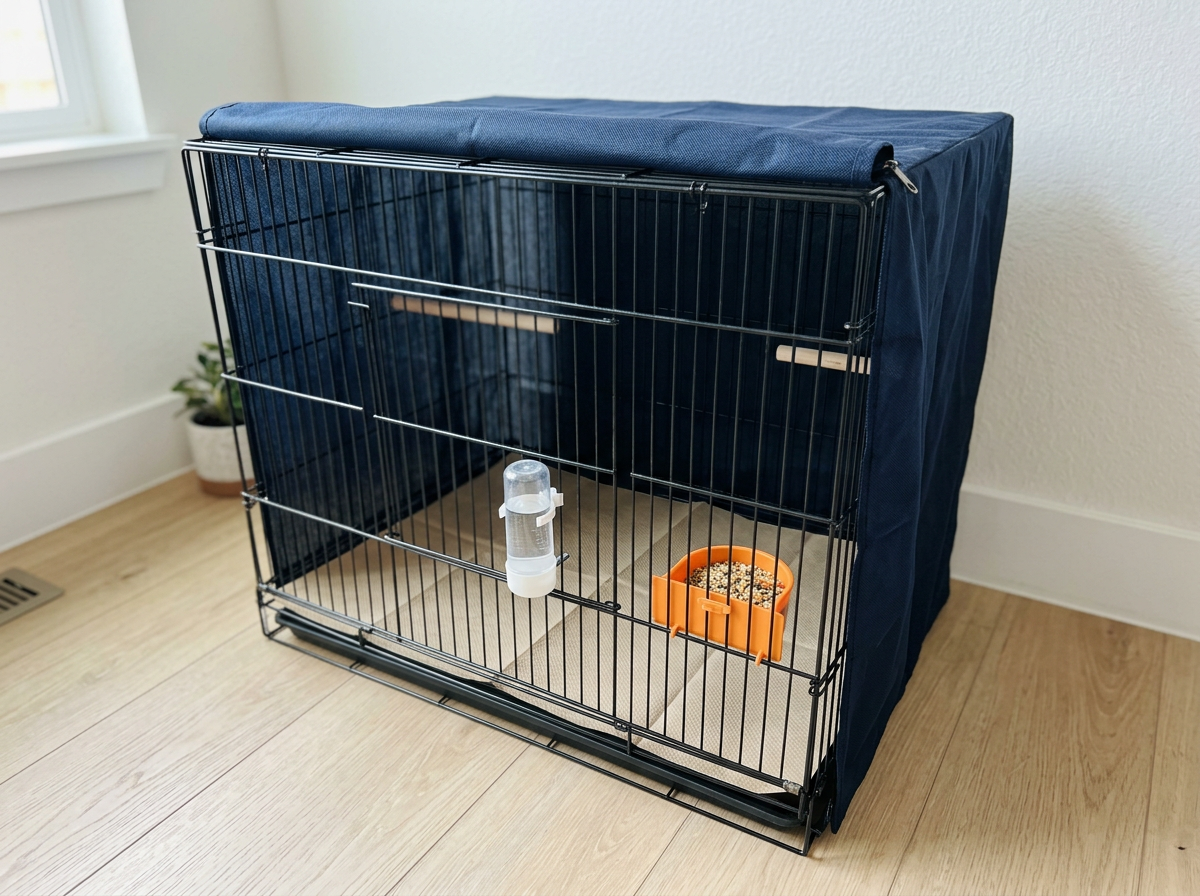
Before your bird comes home, have everything set up and ready: cage assembled in its permanent location, perches in place, food and water dishes filled, liner down, cage cover ready, and all air-quality hazards removed from the room. Book your avian vet appointment for within the first week or two. Do not wait for something to look wrong, new birds can mask illness, and a baseline wellness check is valuable. best bird for first-time owner
- Day 1–2: Let the bird decompress. No handling. Cover three sides of the cage to help them feel secure. Sit nearby and talk softly. Offer food and water on schedule.
- Day 3–4: Begin offering treats through the cage bars. Start watching which foods your bird gravitates toward — useful for training later.
- Day 5–7: If the bird seems calm and is eating well, begin the step-up process. Keep sessions short (5 minutes max). Don't force it.
- Week 2: Start rotating toys. Introduce target training if the bird is stepping up confidently. Attend the avian vet appointment.
- Week 3 onward: Establish out-of-cage time in a bird-proofed space. Continue building the daily care routine into a consistent habit.
If you're still deciding between species after reading this, the honest shortcut is: pick a budgie if you want a hands-on companion with manageable commitment, a cockatiel if you want a more affectionate lap-bird and are ready for the longer lifespan, a canary if you want a low-interaction bird with beautiful song, or a pair of finches if you want the lowest daily demand possible. Our deeper breakdowns of specific species, including what makes each the easiest to care for and the best fit for specific types of first-time owners, are worth reading before you make a final call. But whichever bird you choose, the setup principles and daily care routines covered here apply across all of them. Get the environment right, nail the daily routine, and give your bird time to trust you.
FAQ
My pet bird for beginners isn’t eating much in the first few days, is that normal?
It’s common for a new pet bird to eat less for a couple of days due to stress. Still, you should watch for red flags like repeated puffing up, labored breathing, tail-bobbing, watery droppings, or not touching food at all after about 48 to 72 hours. If any of these show up, contact an avian vet rather than waiting for “settling.”
What’s the safest way to keep my bird warm without messing up sleep?
Use neutral lighting. Avoid heat lamps, red bulbs, or any bright spotlights near the cage, because they can disrupt sleep and raise stress. If your home is cool, use room heating and stable temperatures, not direct cage heat, and place the cage away from drafty doors and vents.
Can I add vitamins or supplements to a pet bird for beginners diet right away?
Skip supplements unless your avian vet specifically recommends them. For most beginners, the safest approach is a correct base diet (quality pellets, species-appropriate) plus small amounts of fresh foods. If you do add anything, introduce it gradually and never use kitchen “fortifiers” like salt, vitamin water, or grit.
How often should I actually clean the water bowl if my bird plays in it?
“Top off” water can leave biofilm behind, so washing matters. For a practical routine, change the full water daily, wash with soap, and rinse thoroughly, then air-dry the bowl before refilling. If your bird bathes in the water bowl, switch to a separate water dish and clean more frequently.
How do I know when it’s safe to start step-up training with my beginner bird?
If your first choice is budgie or cockatiel, change from observation to training gradually. Start when the bird is calm near the cage, use short 5-minute sessions, and never force handling. If your bird leans away, freezes, or fluffs with tense posture, pause and return to sitting near the cage with quiet talk and treats.
What are the most common mistakes people make when target training a pet bird for beginners?
Target training works best when the reward is tiny, consistent, and immediate. Avoid big treats, because you can accidentally teach the bird to grab. Also choose a quiet time of day, and use the same cue phrase every time so the bird doesn’t get mixed signals.
If my household stays up late, how can I still manage the sleep schedule for my beginner bird?
You generally should not keep a new bird on the same schedule as the rest of the household if it means reduced darkness. Aim for 10 to 12 hours of genuine dark sleep, use a cage cover if needed, and keep night lights dim and away from the cage. Erratic sleep can contribute to hormonal behaviors and chronic stress.
Is daily bathing always safe, and what should I do if my bird hates it?
You can offer a bath daily for many birds, but it should match the bird’s comfort. If the bird trembles, hides from the mist, or avoids the bath after repeated attempts, switch methods (shallow dish instead of mist), lower the frequency, or stop and reassess. Also never use scented bath products or add anything to the water.
How should I start out-of-cage time safely with a pet bird for beginners?
If you want to reduce damage risk, don’t start with “free-for-all” out-of-cage time. Begin with 10 to 20 minutes in a fully bird-proofed room, supervise closely, and end sessions on a calm note. For social species, use quiet voice and predictable routines, so the bird associates leaving the cage with safe outcomes.
When should a new bird’s vet check be earlier than the first week or two?
All birds should have an avian vet appointment within the first week or two, but some situations need faster action. Call sooner if you notice abnormal breathing, persistent lethargy, sudden appetite loss, swollen areas, or a sudden change in droppings. New birds can hide illness, so “waiting to see” can be risky.
Do low-handling birds still need daily enrichment, or can I just feed and clean?
Even if you choose a species like a canary that doesn’t require much handling, you still need a baseline enrichment routine. Rotate toys, offer foraging opportunities, and keep the cage in a high-activity area where the bird can observe normal household life without being overwhelmed by drafts or fumes.
How do I choose a cage size if I’m following beginner minimums?
Don’t rely on “minimum” cage dimensions as your long-term plan. The key is more horizontal space and secure perching options. Add natural wood perches in different diameters, position them to encourage movement between them, and ensure the bird can fully stretch without touching the sides or bars.
Best Bird for First-Time Owners: Pick the Right Beginner Species
Choose the best bird for first-time owners with a checklist, realistic beginner picks, setup tips, and daily care steps.