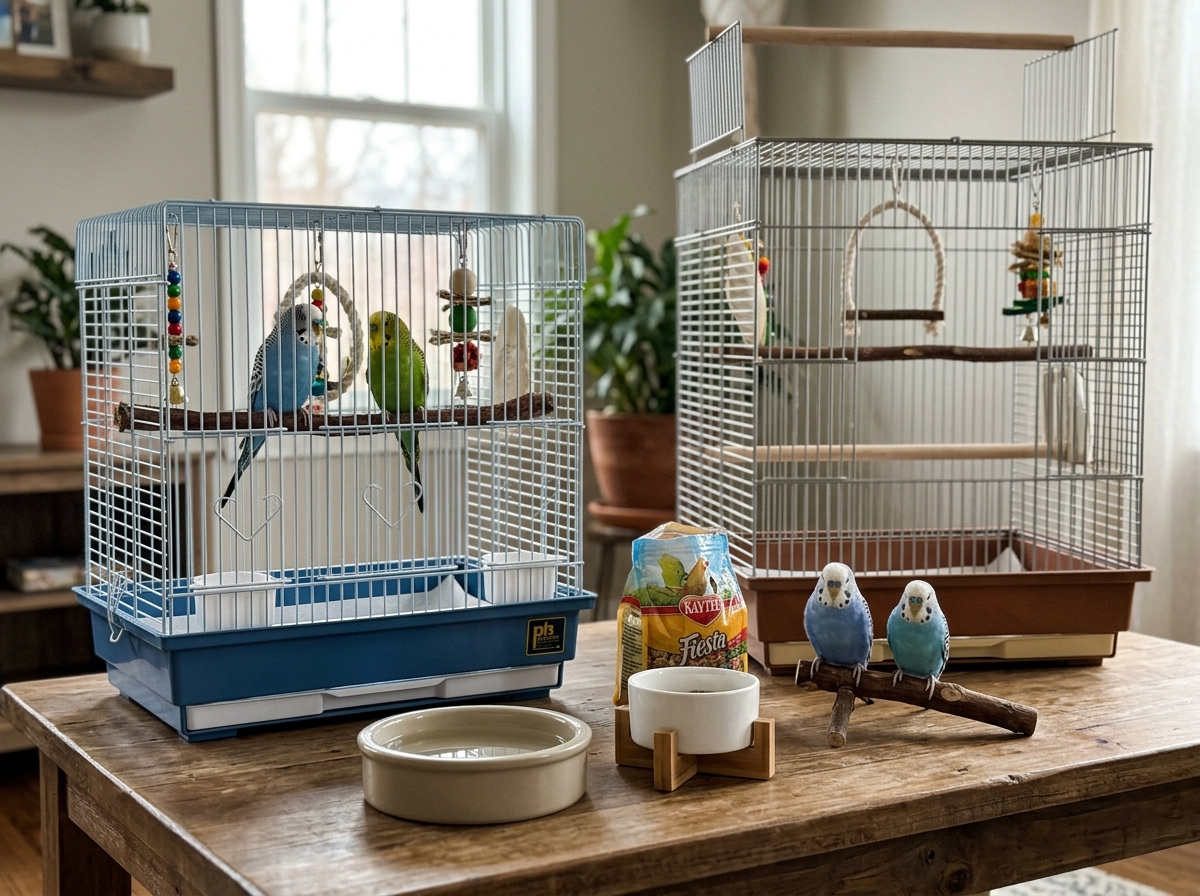
The best bird for most beginners is a budgerigar (budgie) or a cockatiel. That's the short answer. But the longer answer matters more, because the "best" bird is really the one that fits your actual life: how much time you spend home, how much noise you can handle, whether you want a bird that sits on your shoulder or one that entertains itself, and how much you're willing to spend over the next decade or two. Get that match right and you'll have a companion you love. Get it wrong and you'll have a stressed bird and a guilty conscience. pet bird for beginners. best large bird for beginners. best first time bird to buy
What Is the Best Bird for Beginners? Top Picks and Setup
Marcus Chen
23 Mar 2026
How to Choose the Right Beginner Bird for Your Life
Before you look at a single species, answer these five questions honestly. They'll narrow the field faster than any "top 10" list.
How much time are you actually home?
Birds are not low-maintenance pets. Even the easiest species need daily social interaction, fresh food, and mental stimulation. If you work long hours or travel frequently, a single budgie or cockatiel will get lonely and develop behavior problems. In that case, consider getting a pair so they can keep each other company, though you'll give up some of the one-on-one bonding that makes pet birds so rewarding.
How much noise can you (and your neighbors) tolerate?
This one gets underestimated constantly. Cockatiels whistle and chirp throughout the day, which most people find pleasant. Conures can be surprisingly loud for their size. Budgies chatter constantly but at a low volume. If you live in an apartment with thin walls, noise tolerance is a real constraint, not just a preference.
Do you want a hands-on bird or a watch-and-enjoy bird?
Some people want a bird that steps up onto their hand, rides around on their shoulder, and learns tricks. Others want a cheerful, active bird they can watch and talk to without a lot of physical handling. Budgies and cockatiels can go either way depending on how much you socialize them young. Finches and canaries are almost purely watch-and-enjoy birds, which is a perfectly valid choice.
What's your realistic budget, including ongoing costs?
The purchase price of a bird is often the smallest part of what you'll spend. Factor in a quality cage, perches, toys, quality pellet-based food, and avian vet visits, which are more expensive than standard vet care. If you’re wondering which beginner bird is the easiest bird to take care of, budget matters, A budgie might cost $20 to $80 to buy, but setting it up properly costs $150 to $300 upfront. Annual costs for food and one wellness vet visit can run $100 to $300 more. Scale that up for larger species.
Are you ready for a long commitment?
A budgie typically lives 7 to 15 years. A cockatiel can live 10 to 25 years. That's not a typo. A cockatiel you get today could still be with you in your mid-40s if you're in your 20s now. Larger parrots live even longer. This is one of the most commonly ignored facts in beginner bird research, and it's worth sitting with before you decide.
The Best Beginner Bird Species: Honest Pros and Cons
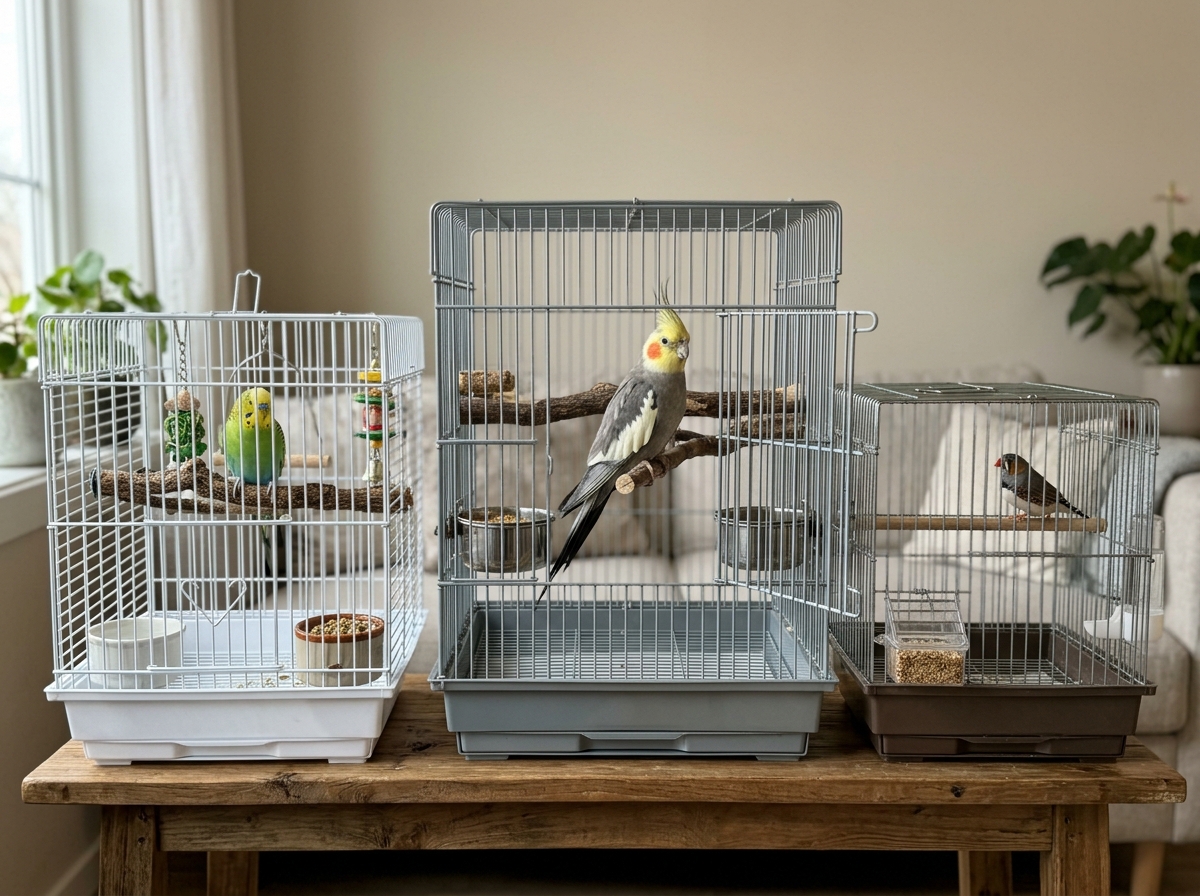
Here's the species I'd actually recommend to a first-time bird owner, along with the honest trade-offs for each. I'm leaving out large parrots like macaws and African greys entirely because they're not beginner birds, no matter what a seller tells you.
Budgerigar (Budgie)
Budgies are the most popular pet bird in the world for good reason. They're small (around 7 inches), affordable, relatively quiet, and can become genuinely affectionate with regular handling. Some budgies develop impressive vocabularies. They do well in pairs if you're away often, and their smaller size means a smaller cage footprint and lower food costs. The main downside is that their small size makes health issues harder to spot, and they can go from "fine" to seriously ill quickly if you're not paying attention. best bird for beginner falconry
Cockatiel
Cockatiels are my personal top recommendation for most beginners who want a hands-on bird. They're gentle, they whistle beautifully, they enjoy being handled, and they're hardy enough that a first-time owner can learn the ropes without constant crises. At 10 to 25 years, they're a real commitment, but that longevity also means you get years of a genuinely bonded relationship. Males tend to be more vocal and learn to whistle tunes. Females are often quieter and a little more independent.
Finches and Canaries
If you want a bird that you watch and enjoy rather than handle, finches (especially zebra finches) and canaries are excellent. They're low-drama, relatively low-cost, and canaries in particular are beautiful singers. They do best in pairs or small groups and don't need the daily hands-on interaction that parrots require. The trade-off: you won't have a bird that sits on your shoulder. If that's what you're imagining, look elsewhere.
Parrotlet
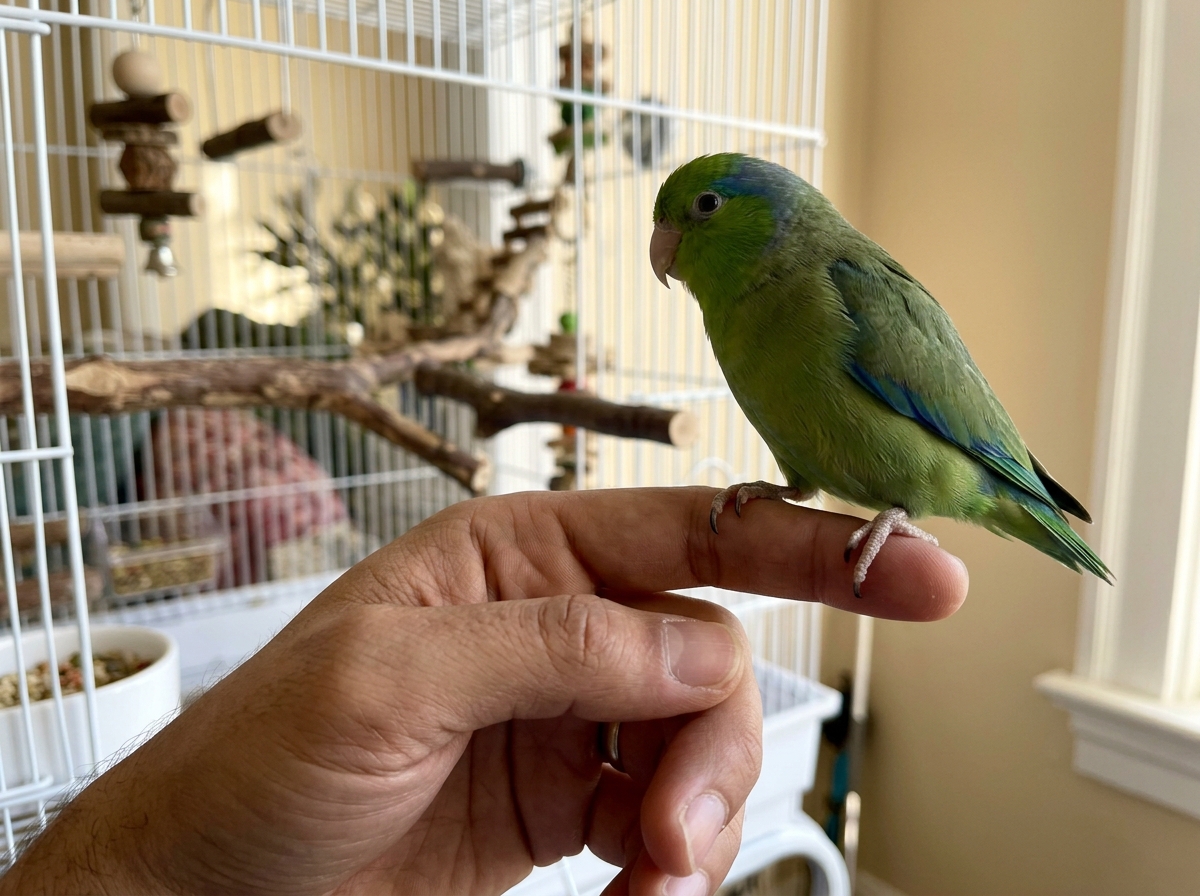
Parrotlets are tiny but pack a big personality. They can be affectionate and playful with their primary person but can also be feisty and territorial. They're quiet enough for apartments, which is a genuine advantage. I'd rate them slightly more challenging than budgies or cockatiels for first-timers because of their strong personalities, but they're manageable with consistent handling from a young age.
Green Cheek Conure
Green cheek conures are the most beginner-accessible conure species. They're playful, cuddly, and moderately quiet compared to their louder conure cousins (like sun conures). They do need significant daily interaction and out-of-cage time. If you're home a lot and want an active, fun companion bird, a green cheek conure is worth considering. If you're away most of the day, skip it.
| Species | Size | Noise Level | Handleability | Lifespan | Best For |
|---|---|---|---|---|---|
| Budgie | Small (~7 in) | Low-Medium | High with training | 7–15 years | First-timers, small spaces, budget-conscious |
| Cockatiel | Medium (~12 in) | Medium | Very high | 10–25 years | Hands-on beginners wanting a bonded companion |
| Finch/Canary | Small (4–8 in) | Low | Low (watch only) | 5–10 years | Busy owners, apartment dwellers, low-interaction preference |
| Parrotlet | Small (~5 in) | Low-Medium | High (needs consistency) | 15–20 years | Apartment owners wanting personality in a small package |
| Green Cheek Conure | Small-Medium (~10 in) | Medium | Very high | 15–20 years | Active owners with time for daily interaction |
Setting Up Your Bird's Cage and Habitat
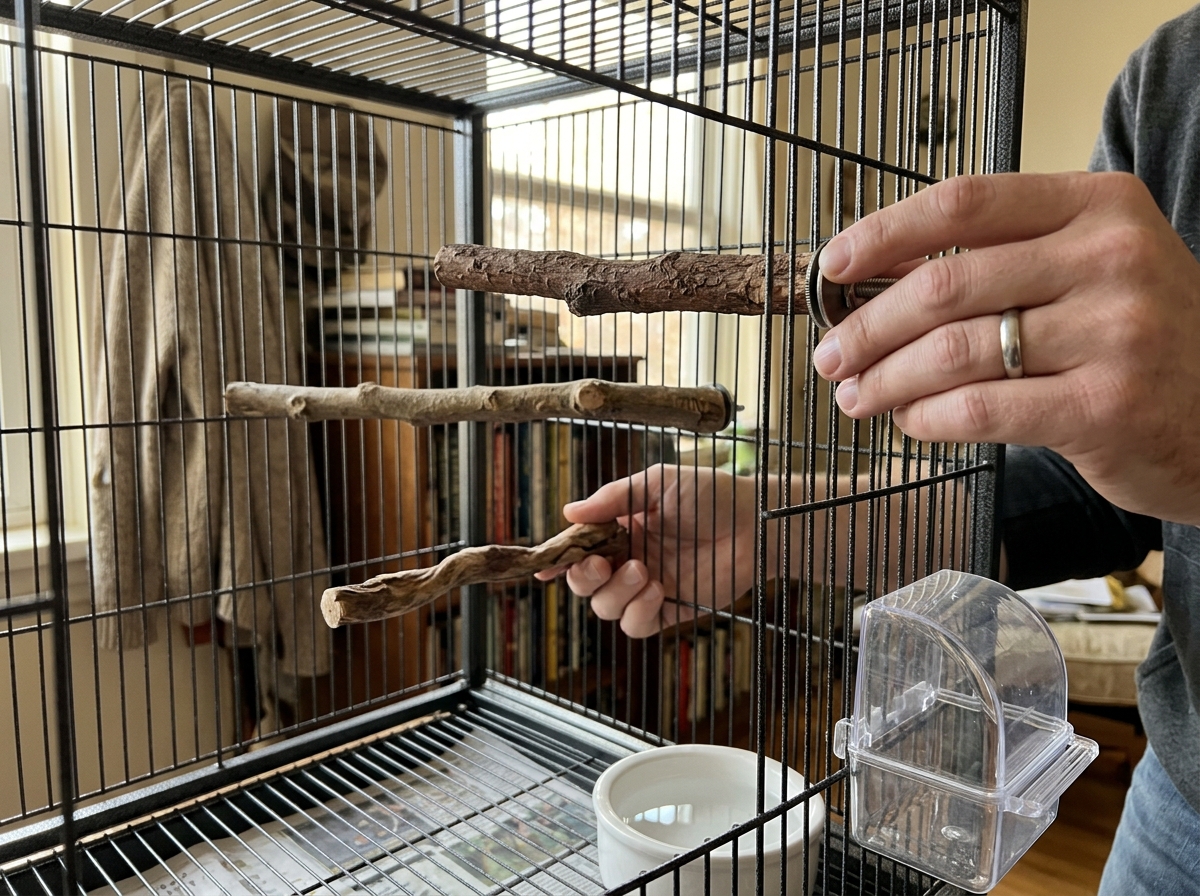
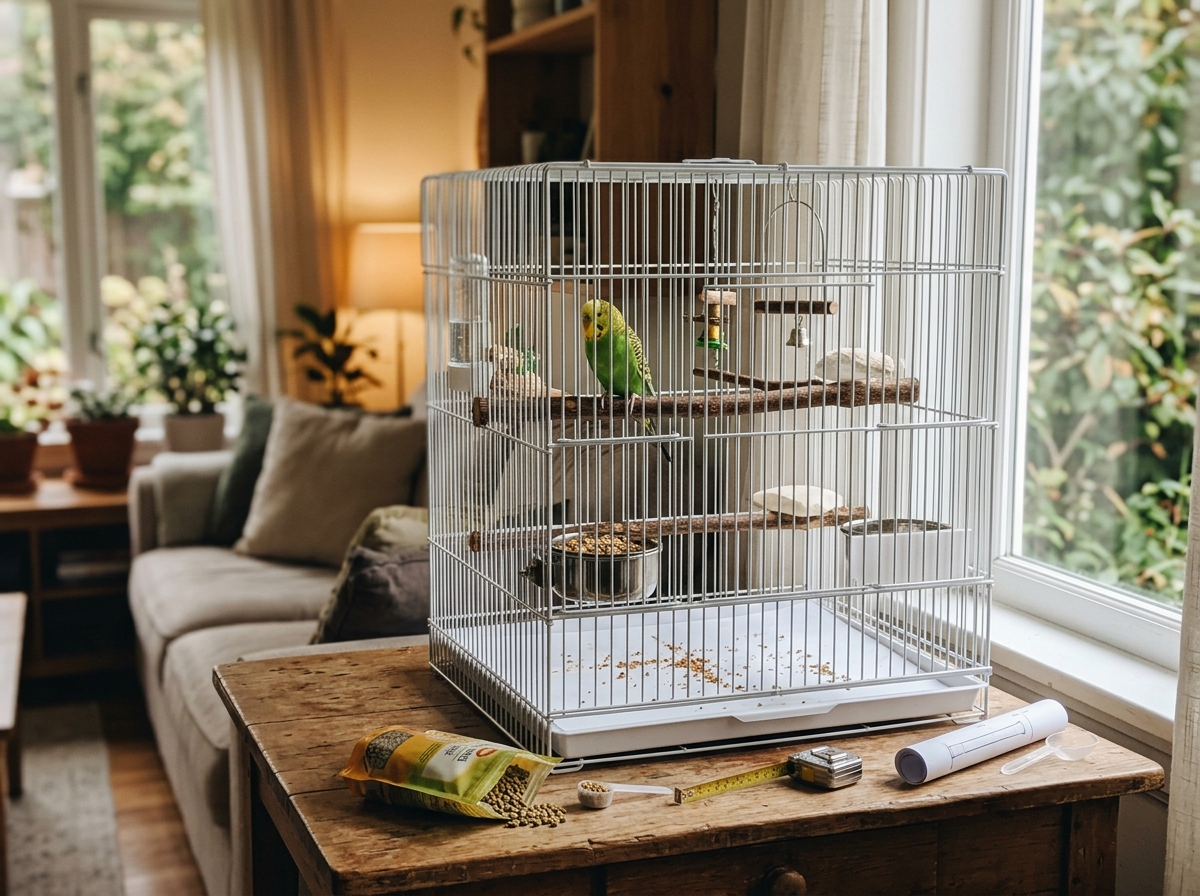
One of the most common mistakes beginners make is buying a cage that's too small. Bigger is always better. A budgie or cockatiel needs at minimum a cage around 20 x 20 x 30 inches, with bar spacing around 0.5 inches so they can't get their head stuck. Medium parrots like conures need at least 0.75-inch bar spacing and a larger footprint. The RSPCA recommends the cage height, width, and depth all be at least twice the wingspan of your largest bird, and even more space if you're housing multiple birds. When in doubt, go one size up from what you think you need.
Where you place the cage matters as much as its size. Put it in a room where the family spends time so the bird feels included, but avoid the kitchen. Cooking fumes, especially from non-stick (PTFE-coated) cookware, are toxic to birds even in small amounts. Keep the cage away from drafts, air conditioning vents, and direct all-day sun. A location near a window where the bird can watch outdoor activity is great, as long as they also have a shaded retreat.
What to put inside the cage
- Multiple perches of varying diameter and texture (natural wood perches like manzanita or java wood are great) to prevent foot problems
- At least two food dishes and one water dish, positioned so droppings won't fall into them
- A few rotating toys (foraging toys, chewable wood toys, foot toys) to keep the bird mentally active
- A cuttlebone or mineral block for beak health and calcium
- A removable tray at the bottom lined with paper (avoid wood shavings or gravel paper, which can be harmful)
Air quality is something most guides skip over, and it shouldn't be. Birds have highly sensitive respiratory systems. Scented candles, air fresheners, cigarette smoke, aerosol sprays, and non-stick cookware fumes can all be fatal. Run an air purifier without ozone in the bird's room and be very deliberate about what you use to clean nearby surfaces. Unscented, bird-safe cleaners exist and are worth the extra few dollars.
What a Real Daily Care Routine Looks Like
Here's what caring for a beginner bird actually looks like day to day. It's not complicated, but it does require consistency.
Feeding

The gold standard diet for most pet birds is a high-quality pellet base (around 60 to 70 percent of the diet) supplemented with fresh vegetables, some fruit, and limited seeds. Seeds alone are like feeding your bird nothing but potato chips: tasty, but nutritionally incomplete and linked to fatty liver disease. Many birds, especially those that come from breeders or pet stores on seed-heavy diets, resist pellets at first. The transition needs to be gradual and ideally supervised by an avian vet, not done cold turkey. Fresh food should be offered daily and removed within a few hours before it spoils.
Cleaning
- Daily: remove and replace cage liner paper, wipe food and water dishes, change water
- Weekly: scrub perches and toys, do a full wipe-down of cage bars and surfaces with bird-safe cleaner
- Monthly: deep clean the entire cage, rotate or replace worn toys, inspect perches for damage
Social time and enrichment
Out-of-cage time is not optional for parrots and conures. At minimum, plan for one to two hours of supervised free time daily in a bird-safe room. During this time, interact with your bird: talk to it, offer training sessions with small treat rewards, and let it explore. Even if your bird is in a pair, they still need human interaction to stay tame and mentally healthy. Rotate toys every week or two so the cage feels fresh. Foraging toys, where the bird has to work to get a treat out, are particularly valuable for mental stimulation.
Mistakes Almost Every Beginner Makes
I'd rather you learn these from reading than from experience, so here are the ones that come up most often.
- Feeding an all-seed diet: Seeds are not a complete diet. They're a treat or supplement. Starting with a quality pellet from day one (or transitioning gradually) is one of the highest-impact things you can do for your bird's long-term health.
- Buying a cage that's too small: The cage at the big-box pet store is almost always too small for the species it's sold alongside. Research the minimum dimensions before you buy and then go bigger.
- Skipping the avian vet: A standard dog-and-cat vet often has limited bird training. Find an avian vet before you bring the bird home, not after something goes wrong. Many offer new-bird wellness exams.
- Using toxic products near the cage: Non-stick cookware, scented candles, air fresheners, and aerosol cleaners are all dangerous. This one surprises new owners constantly.
- Expecting immediate tameness: A new bird needs time to decompress in its new environment, often one to two weeks, before it's ready for active handling. Pushing too fast causes stress and sets back bonding.
- Ignoring subtle illness signs: Birds hide illness instinctively. By the time a bird looks obviously sick, it may have been unwell for days or longer. Learn the subtle signs early.
- Impulse-buying without research: Choosing a bird based on looks or on-the-spot excitement at a pet store often leads to a mismatch. Match the bird to your lifestyle, not just your preferences.
Health, Behavior Red Flags, and When to Call the Vet
Birds are prey animals. In the wild, showing weakness gets them eaten, so they instinctively mask illness until they can't anymore. By the time a bird looks obviously sick, it may have been unwell for days or even weeks. This means you need to know the subtle early warning signs, not just the obvious ones.
Signs that something may be wrong
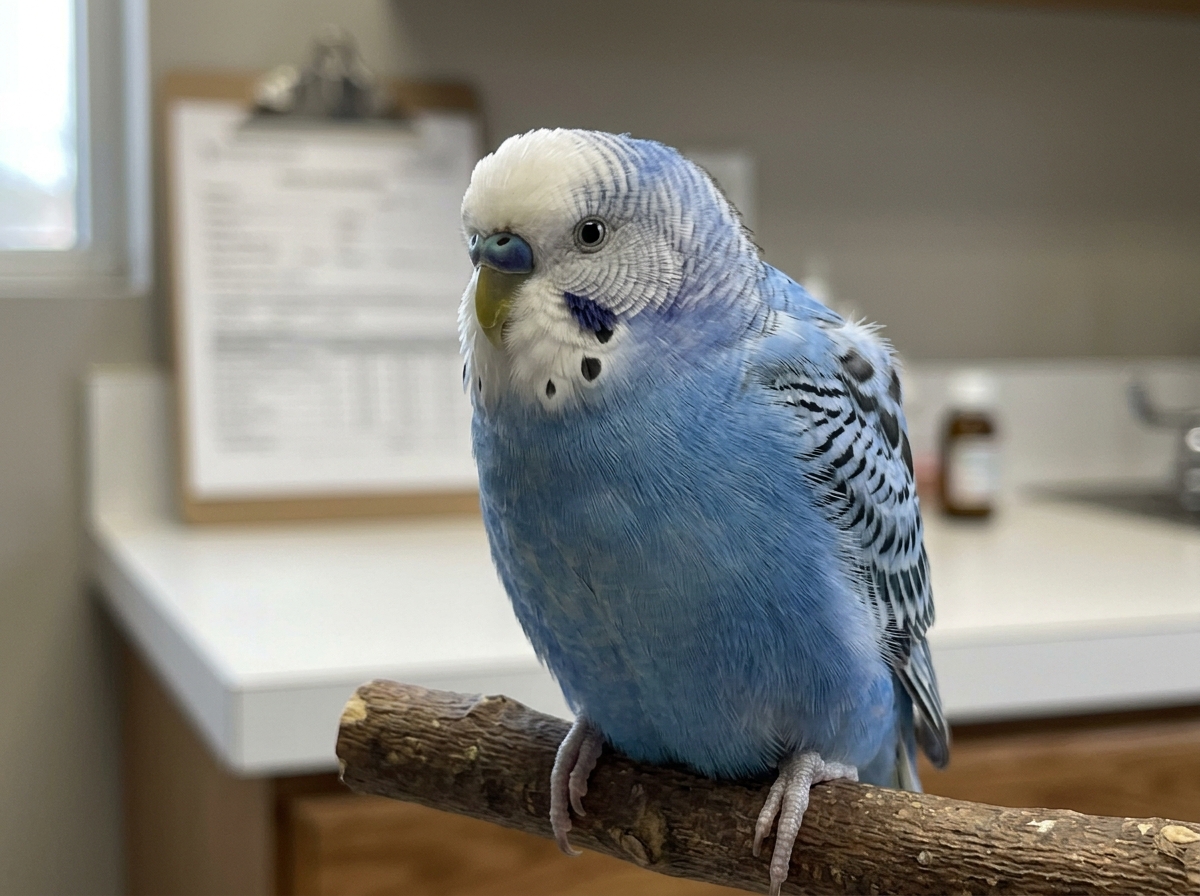
- Fluffed feathers when not sleeping (this is one of the earliest signs of illness)
- Sleeping more than usual or at unusual times of day
- Changes in droppings: color, consistency, volume, or the ratio of solid to liquid portions
- Reduced vocalization or activity from a normally chatty bird
- Tail bobbing while breathing, which can indicate respiratory distress
- Discharge from nostrils or eyes
- Loss of appetite or sudden disinterest in favorite foods
- Sitting on the cage floor instead of on a perch
If you notice any of these signs, don't wait to see if things improve on their own. Call an avian vet the same day. Birds deteriorate quickly once illness progresses past the point they can mask it. how to choose a bird Finding a vet who specializes in avian medicine (look for the initials Dipl. ABVP - Avian Practice, or a member of the Association of Avian Veterinarians) is worth it. Plan for at least one wellness exam per year even when your bird seems healthy, and a new-bird exam within the first week or two of bringing them home.
Normal vs. concerning behavior
New bird owners sometimes panic over things that are completely normal, like a bird grinding its beak quietly before sleep (a sign of contentment) or a cockatiel raising its crest feathers fully when startled. Learning what's normal for your specific bird is part of the first few months of ownership. Keep a loose mental baseline of your bird's typical activity level, vocalization, droppings, and appetite so you notice when something is off.
Where to Get Your First Bird and What to Ask
Where you get your bird matters. The source affects the bird's health, temperament, and how well it's been socialized. Here's how to think about your options.
Reputable breeders
A good breeder is usually the best source for a well-socialized, hand-tame young bird. Look for someone who lets you visit and see the conditions the birds are kept in, who raises birds as a serious hobby or small business (not a factory operation), and who can answer detailed questions about the bird's diet, health history, and parents. A breeder who asks you questions about your setup and experience is a good sign. One who just wants to make the sale is not.
Adoption and rescue
Bird rescues and adoption organizations often have birds that need homes, including cockatiels, budgies, and even the occasional conure. An adult bird from a rescue may already be tame and past the chewing-everything phase. The adjustment period can be longer since the bird has a history you don't fully know, but many rescue birds bond deeply with patient new owners. This is an underrated option for beginners who are committed to doing things right.
Pet stores: proceed with caution
Chain pet stores vary widely in bird quality and care. The birds are often on seed-only diets, housed in stressful conditions, and may not be well-socialized. That said, a healthy individual bird from a pet store can absolutely become a great pet with the right care. If you go this route, evaluate the individual bird and the store's conditions carefully, not just the species.
Questions to ask before you buy or adopt
- What has the bird been eating? (A seed-only diet means you'll need to transition it to pellets carefully.)
- How old is the bird, and is it hand-tamed or parent-raised?
- Has it been seen by a vet, and do you have any health records?
- Has the bird been tested for common diseases like psittacosis?
- What is the bird's typical daily behavior and temperament?
- Do you offer a health guarantee or support after the sale?
What a healthy bird looks like
Before you commit, spend a few minutes watching the bird. A healthy bird should be alert and reactive to its surroundings, have smooth and complete feathering (no bald patches or ragged feathers), have clean nostrils and clear eyes, and be sitting upright on a perch rather than huddled at the bottom of the cage. Its droppings should be mostly formed with a small liquid component, not watery or discolored. If the bird looks lethargic or fluffed up during what should be an active part of the day, walk away.
Bringing your bird home
Set up the cage completely before the bird arrives. Place it in its permanent location, have food and water ready, and minimize chaos in the house for the first few days. Let the bird decompress by giving it quiet time to observe its new environment without being pressured into handling. Talk to it softly from across the room. Offer treats through the cage bars. Most birds start to relax and show curiosity within a week. The first avian vet wellness exam should happen within the first two weeks, even if the bird seems perfectly healthy, because a baseline health check now makes future comparisons much more meaningful.
FAQ
What’s the best bird for beginners if I work full-time and leave home most weekdays?
If you’re gone 8+ hours regularly, a pair (for example, two budgies or two cockatiels) is usually a safer bet than a single bird. You still need daily interaction and out-of-cage time, but companionship reduces loneliness-related behaviors like screaming or feather plucking.
Which is the best bird for beginners in an apartment where neighbors are close by?
Budgies and cockatiels are typically more manageable in shared walls, but “quiet” still varies by individual. If noise is a hard constraint, prioritize budgies, choose a cage location away from shared hallways, and avoid placing the bird’s home directly next to bed headboards where early-morning vocalizing is more disruptive.
What’s the best bird for beginners who wants something that talks quickly?
No bird species reliably “talks” on a timeline, but budgies are often the fastest starters for mimicking words and phrases when training is consistent. Expect more whistling and sound play than full conversation with first-time owners, and focus on short daily sessions rather than long bursts.
Are finches or canaries a good fit if I want to handle my bird a lot?
They’re usually not the best choice if your priority is stepping up onto your hand and cuddling. Finches and canaries generally prefer low-contact interaction, so they work best when you want a viewing companion and you’re comfortable with frequent watching rather than frequent handling.
Which bird is easiest to keep healthy, especially for spotting problems early?
Many beginners find budgies more affordable, but smaller birds can hide illness until it becomes serious. If you want an easier time detecting subtle changes, a cockatiel may feel more “readable” day to day, but either species still needs annual wellness exams and quick action when droppings, appetite, or posture change.
How do I choose between a male and female cockatiel as a first-time owner?
Males often whistle more and are commonly more vocal, which can be a plus if you want interaction through sound. Females are often quieter and can be more independent, which can be great for people who want a calm routine, but both genders still benefit from consistent handling and training.
What’s the best beginner bird if I want shoulder time and tricks?
Budgies and cockatiels can both learn to step up and ride, but shoulder time depends more on socialization and patience than species alone. Plan for a longer trust-building period, start with short positive handling sessions, and never assume a young bird will automatically tolerate cuddling immediately.
How long should I wait before expecting the bird to be friendly?
A lot of birds show curiosity within about a week, but bonding is usually a multi-month process. In the first days, prioritize decompression and quiet observation, then begin gentle, consistent hand-taming only when the bird looks relaxed and accepts treats without retreating or freezing.
What are common beginner mistakes that cause health issues, not just stress?
Two big ones are using unsafe cookware or air products (especially fumes from non-stick/PTFE, aerosols, and smoke) and transitioning diet too abruptly. Also avoid “seed-only” setups, because nutritional gaps can progress quietly even when a bird seems otherwise active.
Do I need a specialized avian vet right away, or can I wait until something goes wrong?
For first-time owners, it’s best to locate and schedule an avian vet before problems start. Plan for a wellness baseline within the first couple of weeks after bringing the bird home, because later comparisons are much harder if you don’t have an early reference exam.
If I buy from a pet store, how can I avoid getting a sick bird?
Don’t rely on the species label alone, evaluate the individual bird’s behavior and physical condition, and ask about diet and any recent veterinary checks if the store can provide that information. Quieter or huddled birds during active hours, ragged feathers, or watery/discolored droppings are strong reasons to pass.
What’s the best beginner bird for someone who wants to keep costs low long-term?
Budgies are often the lowest total cost over time due to smaller cage size needs, lower food consumption, and generally lower per-item setup expenses. However, the biggest “hidden cost” is vet care, so budget for at least one wellness visit annually regardless of species.
Next Article
Best Bird Pet for Beginners: Easiest Choices and Setup
Top beginner bird picks with setup tips, care routines, diet guidance, noise and mess expectations, plus common mistakes