| Species | Noise Level | Mess Level | Handling Need | Best For |
|---|
| Budgie (Parakeet) | Low-moderate (chatty chirps) | Low | Moderate (enjoys interaction) | First-timers who want a friendly, interactive bird |
| Cockatiel | Moderate (whistles, contact calls) | Moderate (powder down) | High (bonds strongly) | People home often who want a cuddly companion |
| Canary | Low-moderate (melodic song) | Low | Low (mostly hands-off) | People who want beauty and song without handling |
| Finch (Zebra or Society) | Low (soft chirps) | Low | Very low (cage birds) | Busy owners or those with noise-sensitive neighbors |
| Lovebird | Moderate-high (sharp calls) | Low-moderate | High (needs daily bonding) | Experienced-ish beginners wanting a spunky bird |
| Parrotlet | Moderate (sharp but brief) | Low | High (needs stimulation) | Small-space owners wanting big-parrot personality |
How to Choose the Right Apartment Bird (Your Lifestyle Checklist)
Species lists are useless if you pick based on looks alone. The bird that's wrong for your lifestyle will stress you both out within a month. Run through these questions honestly before you decide.
How Much Time Are You Actually Home?
This is the single most important question. Cockatiels, lovebirds, and parrotlets form strong bonds with their owners and need daily out-of-cage time and real interaction, ideally an hour or more per day. If you're working long hours or traveling frequently, a solo cockatiel will become bored and loud. Finches and canaries, by contrast, are perfectly content watching the world from their cage as long as they have a companion of their own species. Budgies fall somewhere in the middle: they're social, love interaction, but two budgies together will keep each other company if you're out during the day.
How Noise-Sensitive Are Your Neighbors (and Your Lease)?
A useful rule of thumb from avian vet practices: if you can hear your bird clearly with the room door closed, your neighbors probably can too. Finches and canaries are the safest bet for thin-walled apartments. Budgies are reasonably quiet but will vocalize happily throughout the day. Cockatiels produce contact calls and whistles that carry more than you'd expect. Lovebirds and conures (which aren't on this list for a reason) can produce sharp, piercing calls that are genuinely difficult in an apartment setting.
Do You or Anyone in Your Home Have Respiratory Issues or Allergies?
Cockatiels and cockatoos produce a fine white powder (called powder down) from their feathers that helps condition their plumage. It's visible as a light dust on nearby surfaces and can aggravate asthma or allergies. If anyone in your home is sensitive, cockatiels are a harder choice despite being great birds. Budgies, canaries, and finches produce far less dander, making them more air-quality-friendly for small, enclosed apartments.
What's Your Budget for Setup and Ongoing Care?
Initial setup (cage, perches, food dishes, toys, first vet visit) for a budgie or finch pair typically runs $150 to $300. Cockatiels cost a bit more because they need a larger cage and more enrichment variety. Ongoing costs include food, cage liners, the occasional toy replacement, and annual avian vet checkups. Don't skip the avian vet budget: general practice vets often have limited bird experience, and avian specialists charge accordingly. Factor that in before you fall in love with any species.
Are You Comfortable with Training?
Budgies, cockatiels, and parrotlets can be trained to step up, do simple tricks, and even mimic words or whistles. That training takes consistent daily practice of 5 to 15 minutes. If you find that appealing, those species will reward you. If you just want a pleasant, low-key bird you can enjoy without a training regimen, a canary or finch pair is genuinely the smarter pick.
Best Beginner Species for Apartments: Pros, Cons, and Who They're For
Budgie (Parakeet)
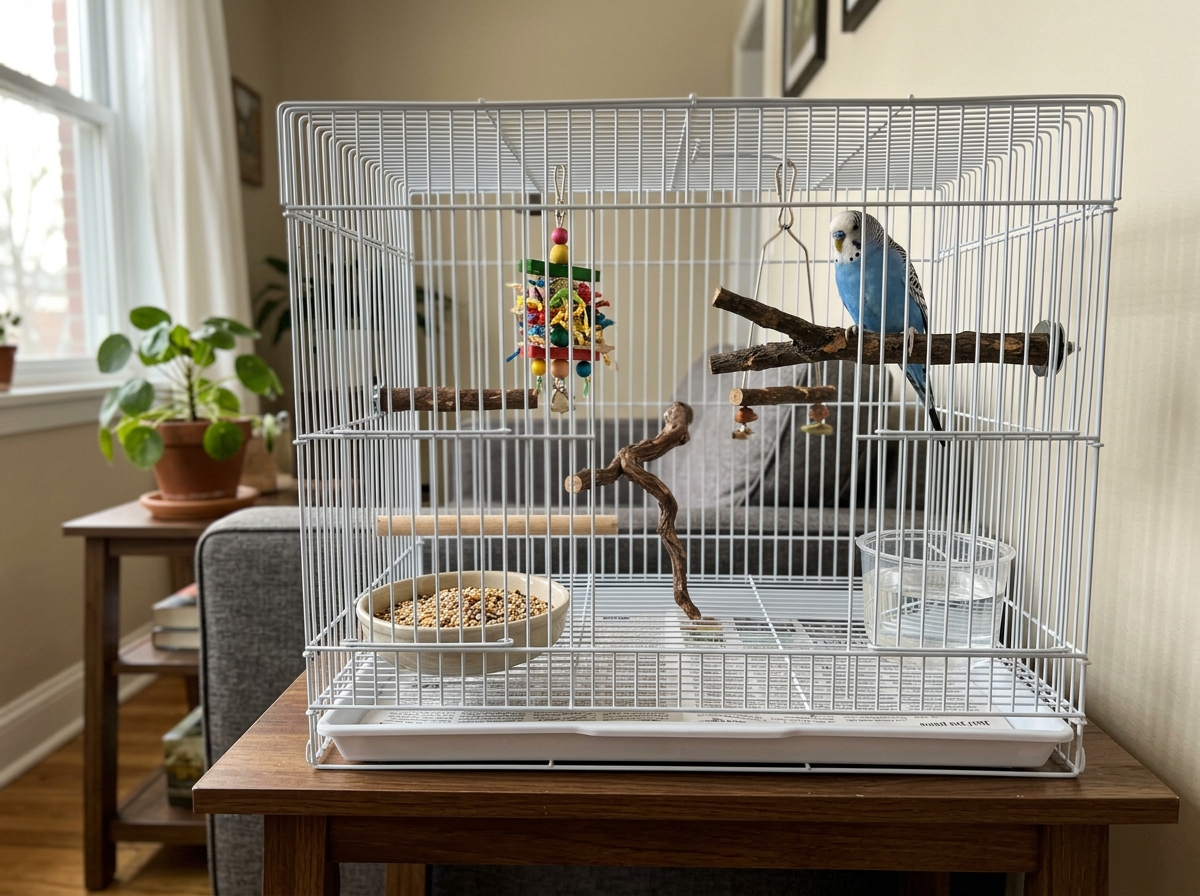
Budgies are the most popular pet bird in the world for good reason. They're small (around 7 inches long), eat relatively little, and are genuinely curious and playful. A well-socialized budgie will step up onto your finger, explore your shoulder, and chatter happily at you for hours. They can mimic speech, though not as clearly as larger parrots. Two budgies kept together are significantly happier than a solo bird, and they'll entertain each other while you're at work. The tradeoff: budgies are chatty throughout the day, and a pair can be surprisingly loud in a small apartment. Their mess is minimal compared to larger birds, though seed hulls and feather dust do land outside the cage.
Cockatiel
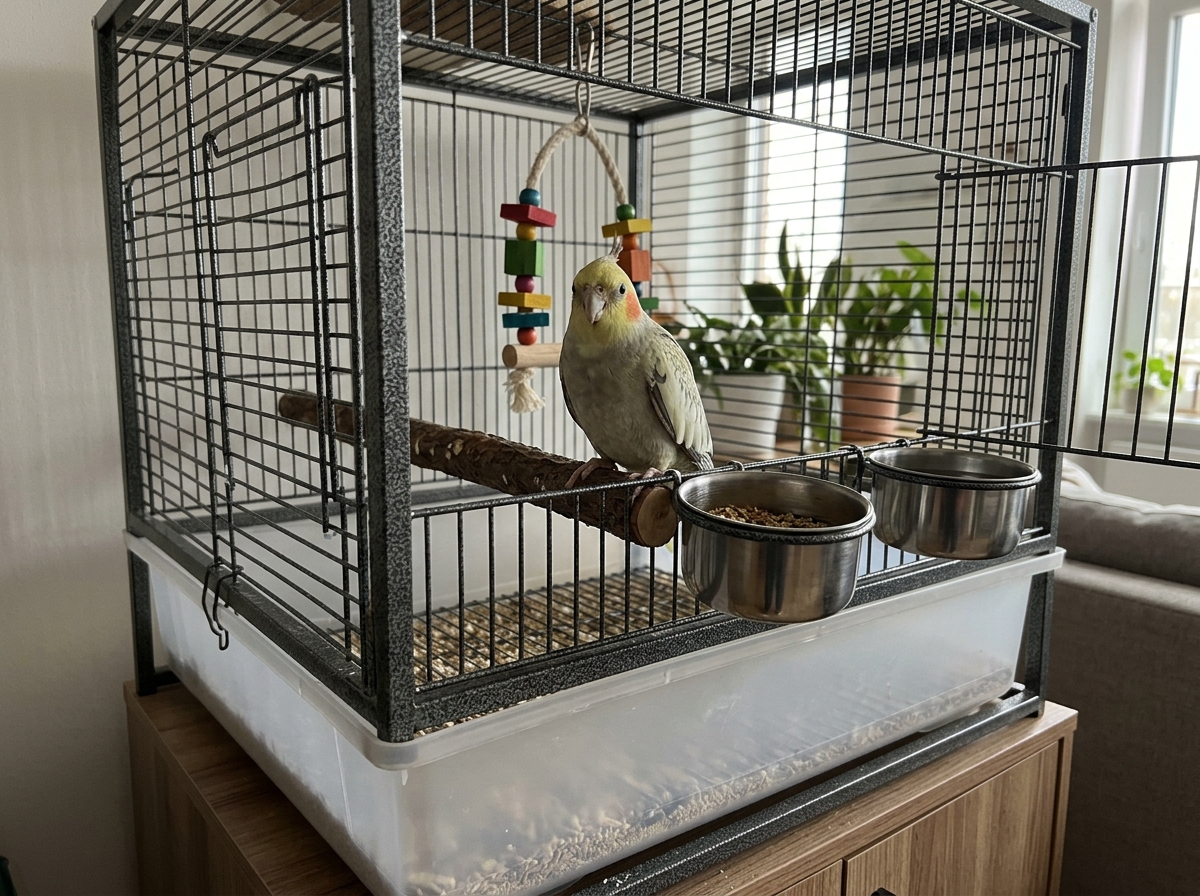
Cockatiels are the quintessential apartment companion bird if you're home regularly. They're affectionate, bond closely with their person, and males especially are enthusiastic whistlers and mimics. The appeal is real: a hand-raised cockatiel is one of the warmest, most personable birds you can keep. The honest tradeoffs are also real, though. Cockatiels produce powder down that coats nearby surfaces, they have a loud contact call they'll use if they can't see you (which is a problem if you're in another room), and they genuinely need significant daily interaction or they become stressed and vocal. They need a larger cage than a budgie (more on that below) and more enrichment variety to stay mentally healthy.
Canary
If you want a beautiful, melodic, low-maintenance bird, a canary is hard to beat for an apartment. Male canaries sing, and it's genuinely pleasant, not loud or sharp. They don't require handling, which makes them ideal if you like watching birds more than interacting with them. They're also a good fit for apartments with noise-sensitive neighbors because their sound level is well within what a closed door can contain. The main limitation: canaries are largely cage birds and don't bond with owners the way parrots do. If you want a bird to handle and connect with, a canary will likely leave you wanting more.
Finches (Zebra or Society Finch)
Finches are the best choice for apartment dwellers who want living, active, enjoyable pets with almost no noise risk and very little handling demand. A pair of zebra finches will zip around their cage, interact with each other, and produce soft, high-pitched chirps that are virtually inaudible outside a closed room. They don't need or particularly want to be handled, so this species only works if you're genuinely happy watching them rather than holding them. Keep them in at least pairs, because solo finches are unhappy finches.
Lovebird
Lovebirds pack a huge personality into a tiny body (around 5 to 6 inches), which is part of their appeal. A hand-raised, well-socialized lovebird can be affectionate and playful. The catch is that they're louder than their size suggests, can be nippy if not consistently handled, and don't do well ignored. They're better suited to apartment owners who've had a budgie or finch first and know what daily bird care actually looks like. If you keep a single lovebird, you become their flock, so you need to be ready to put in real daily time.
Parrotlet
Parrotlets are the smallest true parrots, roughly the size of a budgie but with a big-parrot attitude. They're feisty, intelligent, and can be quite affectionate with consistent handling. Their calls are sharp but brief rather than sustained, which makes them a viable apartment option compared to conures or larger parrots. The big requirement is mental stimulation: a bored parrotlet becomes aggressive and nippy fast. They're a solid choice if you're home often, enjoy training, and want a tiny parrot that genuinely interacts with you.
Noise, Mess, Odor, and Air-Quality Realities
Let's talk about the stuff most guides skim over, because this is exactly where apartment bird ownership goes wrong.
Noise: What You'll Actually Hear Day-to-Day
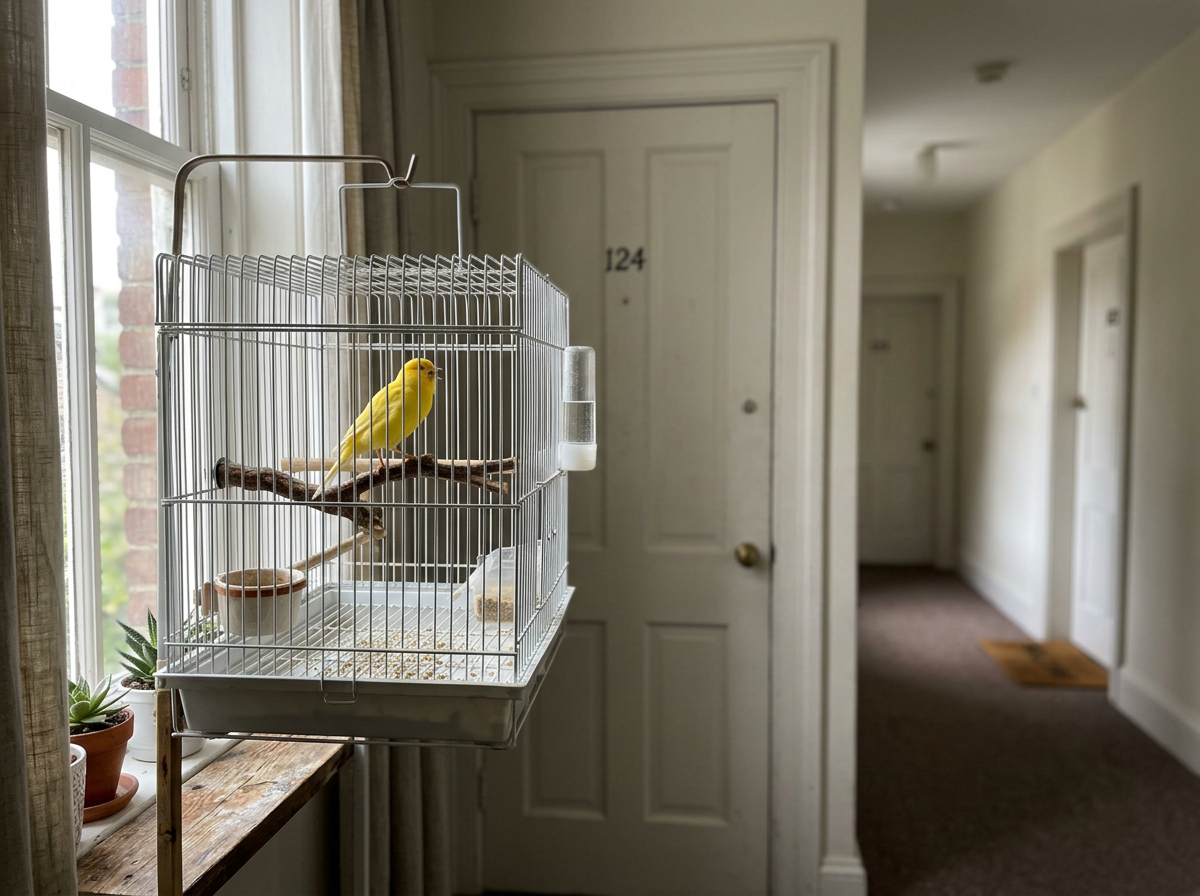
All birds vocalize. That's not a bug, it's a feature of keeping a bird. Budgies and cockatiels are chatty throughout the day, meaning you'll hear them in waves of activity rather than constant noise. Early morning tends to be the loudest period. If your neighbors are home during the day and your walls are thin, even a budgie's cheerful chatter can become a complaint issue. The practical fix: position the cage away from shared walls, keep a curtain or drape between the bird and exterior-facing windows, and don't reinforce screaming by running to the bird when it calls out loudly. Responding to quiet, pleasant vocalizations reinforces the bird to stay at that volume.
Mess: Feathers, Hulls, and Droppings
Bird mess in an apartment is manageable but real. Seed hulls get kicked out of the cage and land on the floor. Droppings happen constantly, including during out-of-cage time. Feathers molt and float. The practical approaches: use a cage with a deep tray, line the tray with plain paper (not cedar chips or wood shavings, which can irritate airways), and place the cage on a washable mat or tray that catches scatter. A small handheld vacuum dedicated to bird mess makes daily cleanup fast.
Odor: Honest Assessment
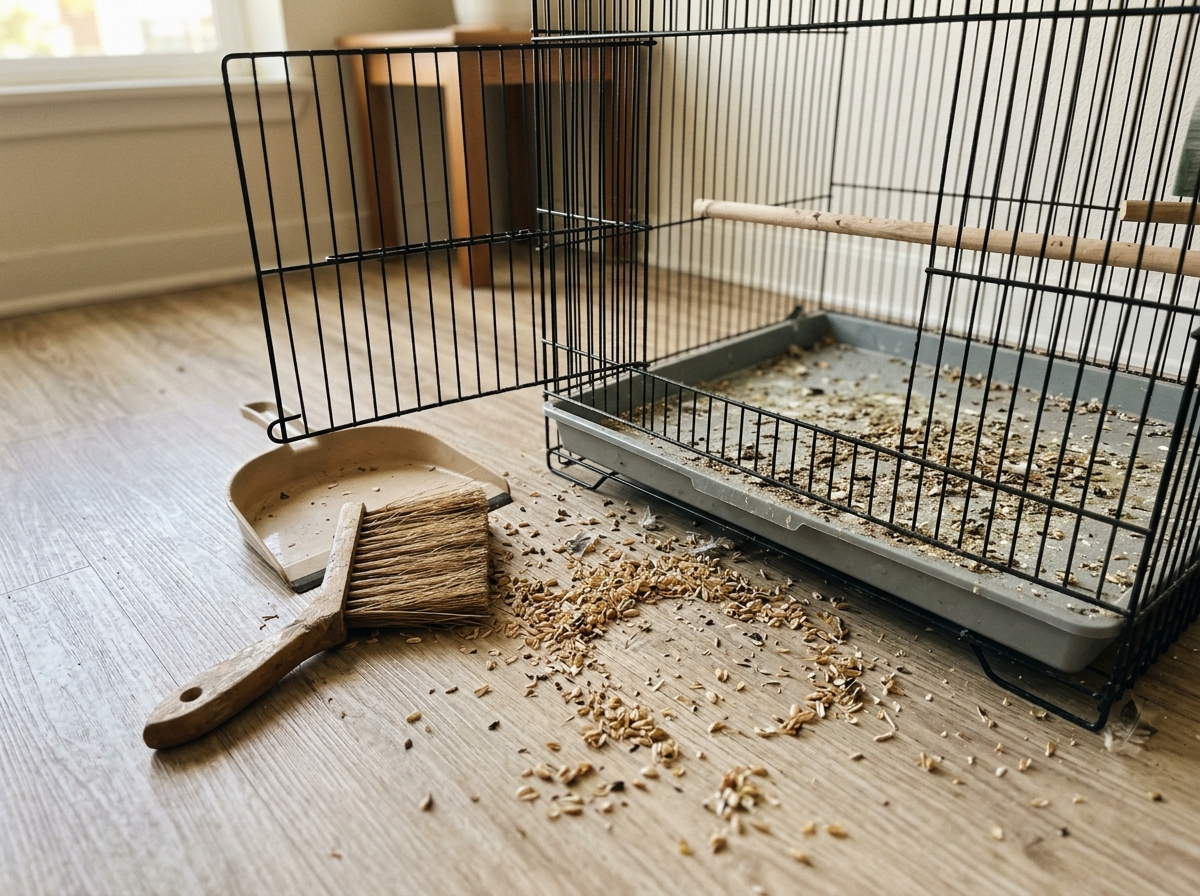
Healthy birds kept in clean cages don't smell bad. The odor issue in apartments almost always comes from infrequent cleaning: droppings that sit too long in a tray, old wet food left in dishes, or a water dish that hasn't been changed daily. If you clean the tray every one to two days and do a full cage scrub weekly, odor is genuinely a non-issue for the small species on this list. Larger parrots are a different story, but for budgies, finches, canaries, and cockatiels kept in properly sized cages with good hygiene, you won't have a smell problem.
Air Quality: The Risks You Need to Know About
Air quality is the one area where apartments create a genuinely serious risk for birds, and it's underestimated by a lot of new owners. The biggest danger is PTFE, which is the coating on non-stick (Teflon) cookware. When non-stick pans overheat, they release fumes that are lethal to birds extremely quickly. Birds have highly efficient respiratory systems that make them far more vulnerable to airborne toxins than humans or other pets. This isn't a fringe risk: avian vets see cases of PTFE poisoning regularly. The practical rule for apartment cooking with a bird is to keep the bird out of any room that shares airflow with the kitchen while non-stick cookware is in use, and to switch to stainless steel or cast iron pans where possible. Similarly, be careful with scented candles, aerosol sprays, air fresheners, and cleaning products with strong fumes. Always ventilate well after cleaning the cage with any disinfectant, including diluted bleach, before returning the bird to the room.
Apartment Setup Essentials
Cage Size: Bigger Than You Think
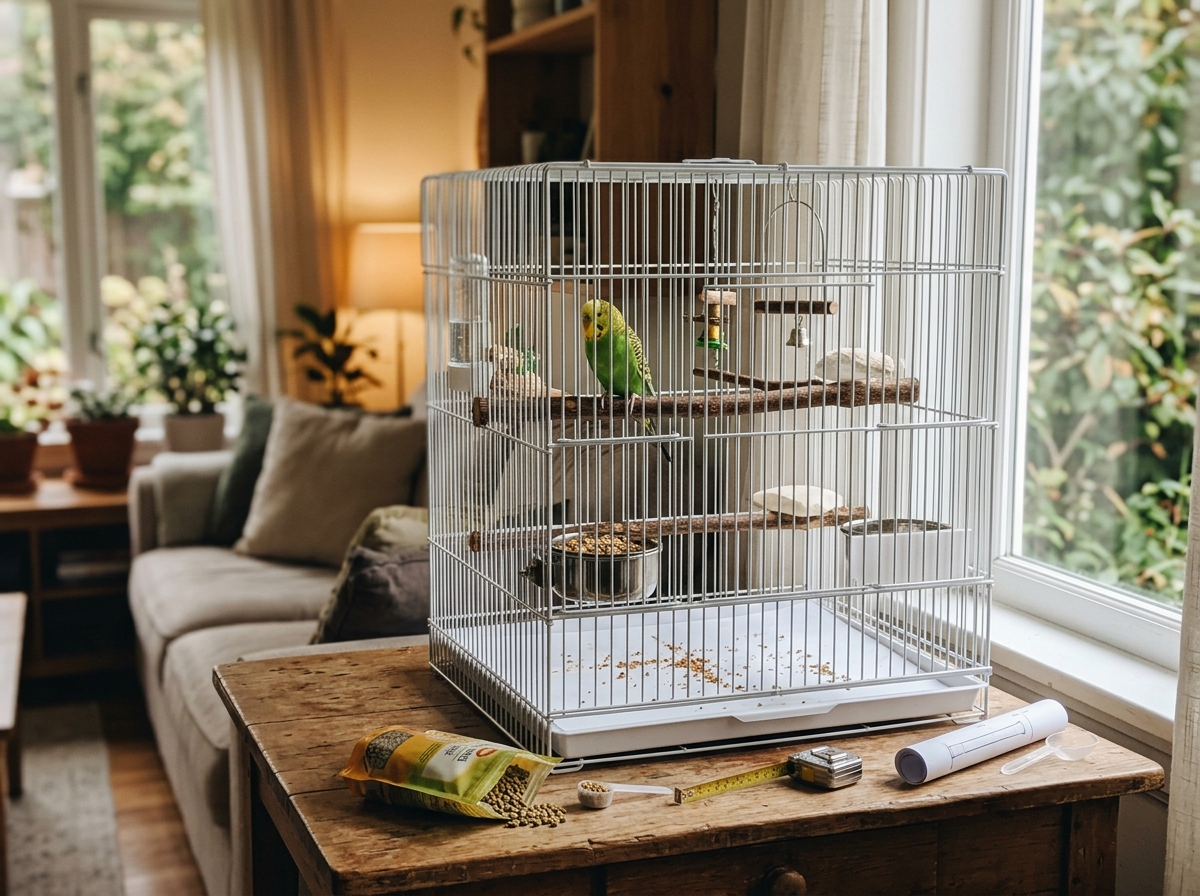
The minimum cage size for budgies, cockatiels, lovebirds, and parrotlets according to veterinary guidance (including the Merck Veterinary Manual) is 20 x 20 x 30 inches, with bar spacing no wider than half an inch for small species. That's a minimum, not a recommendation. In an apartment where the bird can't free-fly in a large room safely, the cage is effectively home for most of the day, so bigger genuinely matters. For cockatiels especially, aim for a cage at least 24 x 24 x 36 inches if you can fit it. Canaries and finches need cages that allow horizontal flight: a longer, wider cage matters more than height for these species. A cage that forces the bird to fold its wings or brush the bars when moving is too small, full stop.
Cage Placement: Where You Put It Matters More Than You'd Think
Place the cage at chest or eye level, not on the floor. Birds feel vulnerable when people and pets are looming over them from above, and floor placement is a stress source that shows up as chronic anxiety and screaming. Position the cage against a wall (not surrounded by open space on all sides, which creates exposure stress) but not pushed into a corner where airflow is poor. Keep it away from air conditioning vents, drafty windows, and exterior doors. Also keep it away from the kitchen: even without Teflon, kitchens generate steam, smoke, and fumes that aren't safe for birds. A living room wall, away from direct drafts and the kitchen, is the sweet spot in most apartments.
Ventilation and Air Quality Setup
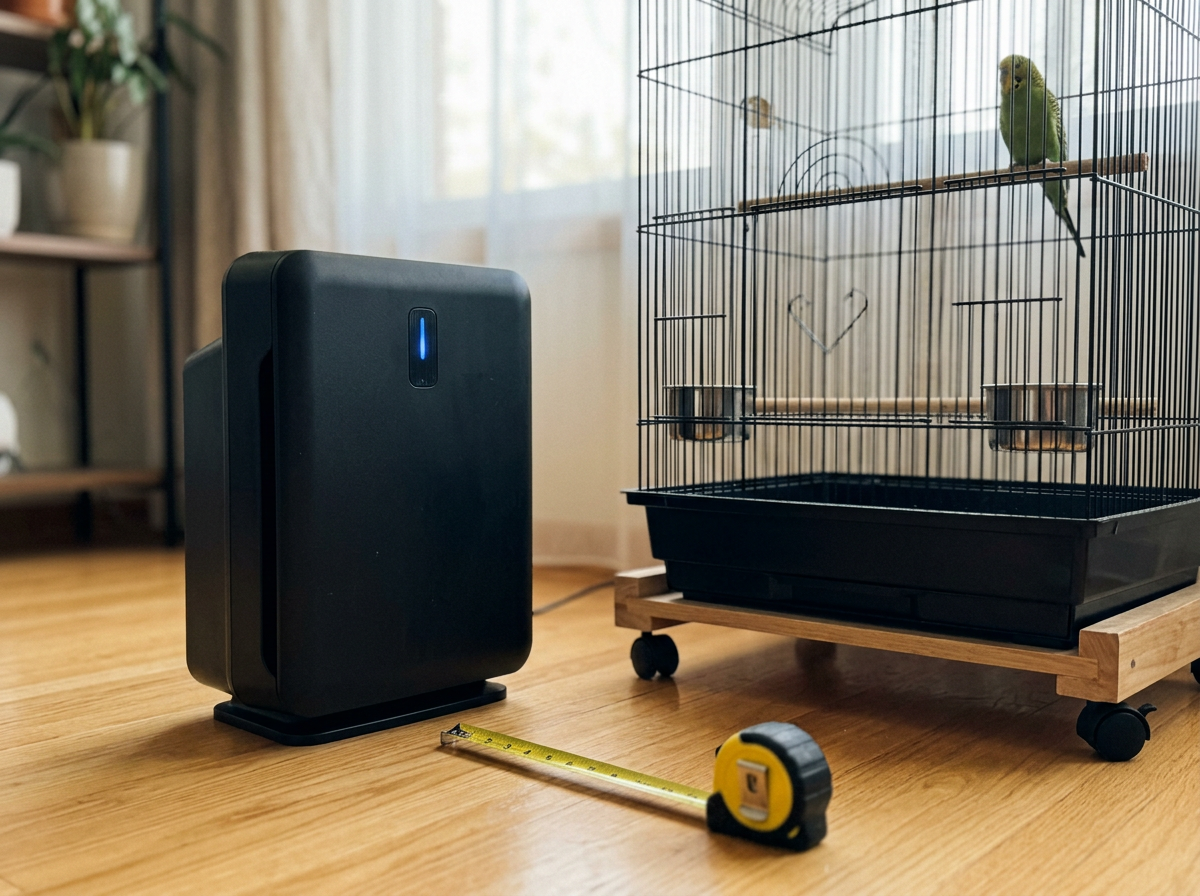
In a small apartment, air quality management is active, not passive. A HEPA air purifier near the bird's cage helps capture feather dust, dander, and particulates, especially important with cockatiels. Open windows when weather allows, but avoid direct cold drafts blowing on the cage. If you're cleaning the cage or using any disinfectant, move the bird to another room, clean and ventilate fully, and only return the bird when the air is clear. The same goes for painting, using aerosol products, or burning anything in the apartment.
Enrichment and Perch Setup Inside the Cage
A cage with nothing but two plastic dowel perches and a mirror is not enrichment, it's a holding cell. Birds need perch variety: natural wood perches of different diameters help exercise their feet and prevent pressure sores. Include at least one rope perch, one natural branch-style perch, and foraging toys that make them work for food. Rotate toys every week or two so the environment stays interesting. For budgies and cockatiels, a simple foraging toy (seed hidden inside a folded paper cup or a kabob toy they have to dismantle) takes five minutes to set up and provides genuine mental engagement. Canaries and finches need fewer toys but benefit from natural branch perches and a bath dish.
Daily Care Routine That Actually Fits Apartment Life
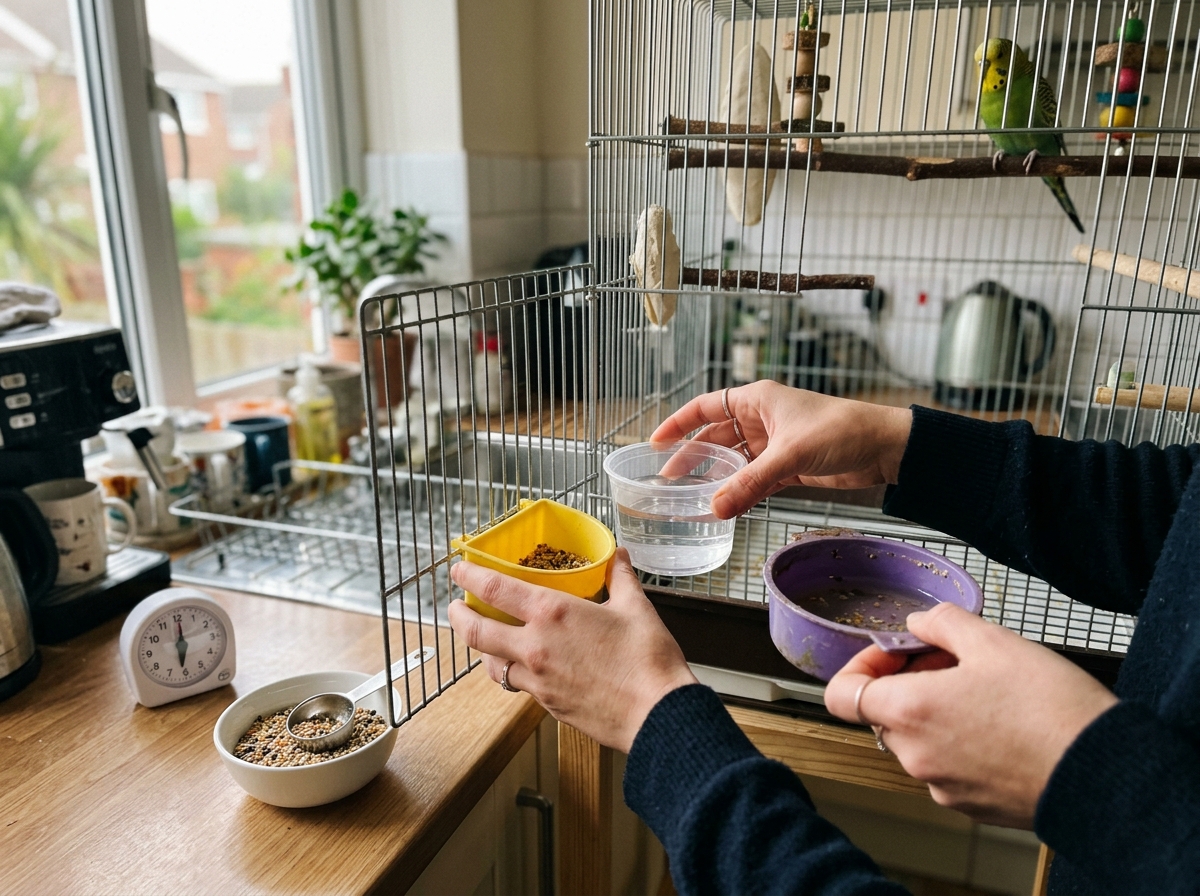
The daily routine for a small apartment bird doesn't have to be complicated, but it does need to be consistent. Birds are creatures of routine, and irregular schedules cause stress.
- Morning: Uncover the cage, change the water dish (every single day, no exceptions), check and refresh food. Remove any wet or perishable food from the previous day.
- Morning check: Glance at droppings in the tray. Healthy droppings are consistent in color and form. Changes in droppings are often the first sign of illness in birds.
- Daytime (for interactive species): Schedule one or two sessions of out-of-cage time or direct interaction, ideally 20 to 60 minutes total. A bird-safe room with the door closed and ceiling fans off works fine in most apartments.
- Evening: Spot-clean the tray if needed. Talk to, whistle with, or train your bird for 5 to 15 minutes. This is the best bonding window for cockatiels and budgies.
- Night: Cover the cage with a breathable cage cover to signal sleep time and block drafts. Birds need 10 to 12 hours of darkness for healthy sleep.
- Every 1 to 2 days: Replace cage liner (plain paper works perfectly). Scrub food and water dishes.
- Weekly: Full cage scrub with a bird-safe disinfectant or diluted white vinegar. Rotate toys. Check perches for wear or excessive soiling.
Training and Enrichment That Works in a Small Space
You don't need a dedicated bird room to train a budgie or cockatiel. A bathroom with the toilet lid closed, or a small bedroom with the door shut and ceiling fan off, works fine for supervised out-of-cage time and step-up practice. Keep training sessions short (5 to 10 minutes max), always end on a positive note, and use millet spray as a high-value reward. Clicker training works well for parrotlets and cockatiels especially. For canaries and finches, enrichment is more about the environment (bathing opportunities, varied perches, foraging setups) than direct interaction.
Common Beginner Mistakes to Avoid
These are the mistakes I see most often from apartment bird owners, and most of them are avoidable with a little upfront planning.
- Getting a species that needs more time than you can give: A cockatiel or lovebird kept by someone who works 10-hour days and travels frequently will become stressed, loud, and feather-destructive. Be honest about your schedule before choosing an interactive species.
- Putting the cage near the AC vent or a drafty window: Birds are highly sensitive to temperature swings and direct cold air. A cage placed under an air vent is a recipe for chronic respiratory illness.
- Ignoring noise complaints until it's a lease problem: If your bird is louder than expected, address it proactively: repositioning the cage, working on not reinforcing screaming, and talking to your neighbors before they talk to management. A heads-up and a small gesture go a long way.
- Choosing a cage that's technically 'minimum' but functionally too small: The minimum cage size guidelines assume regular out-of-cage time. If your bird is in the cage for most of the day, minimum is not enough. Size up whenever your apartment space allows.
- Using Teflon cookware near the bird without understanding the risk: This is the mistake that kills birds in apartments. Non-stick cookware used in a small apartment with shared airflow is a genuine danger. Switch pans or keep the bird in a room with a closed door during cooking.
- Under-enriching the cage and then being surprised by bad behavior: Boredom in intelligent birds leads to screaming, feather plucking, and aggression. Rotating toys and adding foraging challenges is not optional, it's maintenance.
- Skipping the avian vet visit: A baseline health check from an avian specialist when you first get your bird is not optional. Many bird illnesses are subtle early on, and a vet experienced with birds will catch things a general practice vet won't.
The bottom line is that apartment bird keeping is genuinely doable and rewarding if you match the species to your real lifestyle, set up the environment correctly from day one, and stay consistent with care. Budgies and finches are the easiest entry points for most apartment dwellers, if you’re looking for the is myna bird good for home, these are great starting options for people asking whether is dove bird good for home. best house bird pets Cockatiels are the best choice if you're home often and want a deeper bond. Start with one of those, get the setup right, and you'll have a companion that makes apartment life genuinely better. For more help narrowing down your choice, take a look at guides on the best small bird pets and the best bird for home living in general, since many of the same principles apply with a few extra considerations beyond the apartment context.